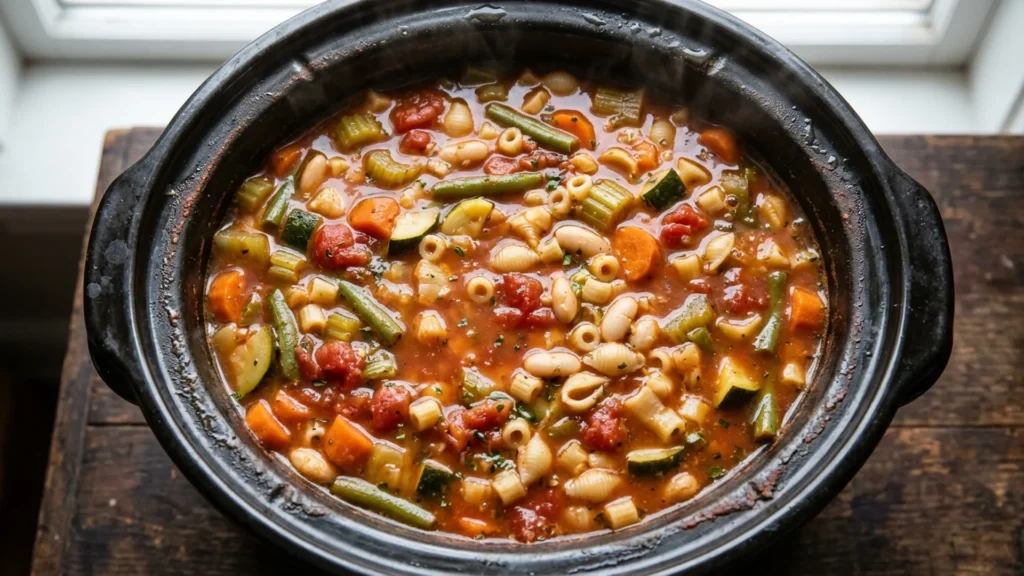
Slow cooker minestrone is one of those dishes the machine was practically invented for: a big, forgiving Italian vegetable soup that gets deeper and rounder the longer it sits, packed with beans, tomatoes, vegetables, and a little pasta. You load the pot in the morning, walk away for the day, and come home to a kitchen that smells like a trattoria. The catch, and it is the only real catch, is that not everything in the bowl wants to cook for eight hours. The aromatics, beans, and tomatoes love the long simmer. The pasta, zucchini, and greens do not, and the difference between a great pot and a sad, mushy one comes down almost entirely to when you add them.
This guide walks through the whole thing: the base you can leave alone all day, the exact order and timing for the delicate add-ins, which beans and pasta hold up best, the parmesan rind trick that does the heavy lifting on flavor, and how to keep leftovers from turning to glue. I cook a lot of soup, and minestrone is the one I make most in cold months because it scales, freezes, and feeds a crowd without much fuss. Get the layering right and you will never go back to dumping everything in at once.
What Minestrone Actually Is
Minestrone is not a fixed recipe so much as a method. The word roughly means a big, hearty soup, and traditionally it was whatever vegetables a household had on hand, stretched with beans and a handful of pasta or rice to make it filling. That is good news for you, because it means minestrone is endlessly flexible. There is no single correct vegetable list, no canonical bean. What makes it minestrone rather than just vegetable soup is the combination: a tomato-tinged broth, at least one kind of bean, a mix of sturdy and tender vegetables, and a starch in the form of small pasta.
Because it is built on cheap, forgiving ingredients, minestrone rewards a slow cooker beautifully. The long, gentle heat softens the vegetables, lets the beans give up their starch to thicken the broth, and gives the tomato and aromatics time to mellow into something that tastes like it took real effort. The trick is simply respecting that different ingredients have different timelines.
The Base You Can Leave Alone All Day
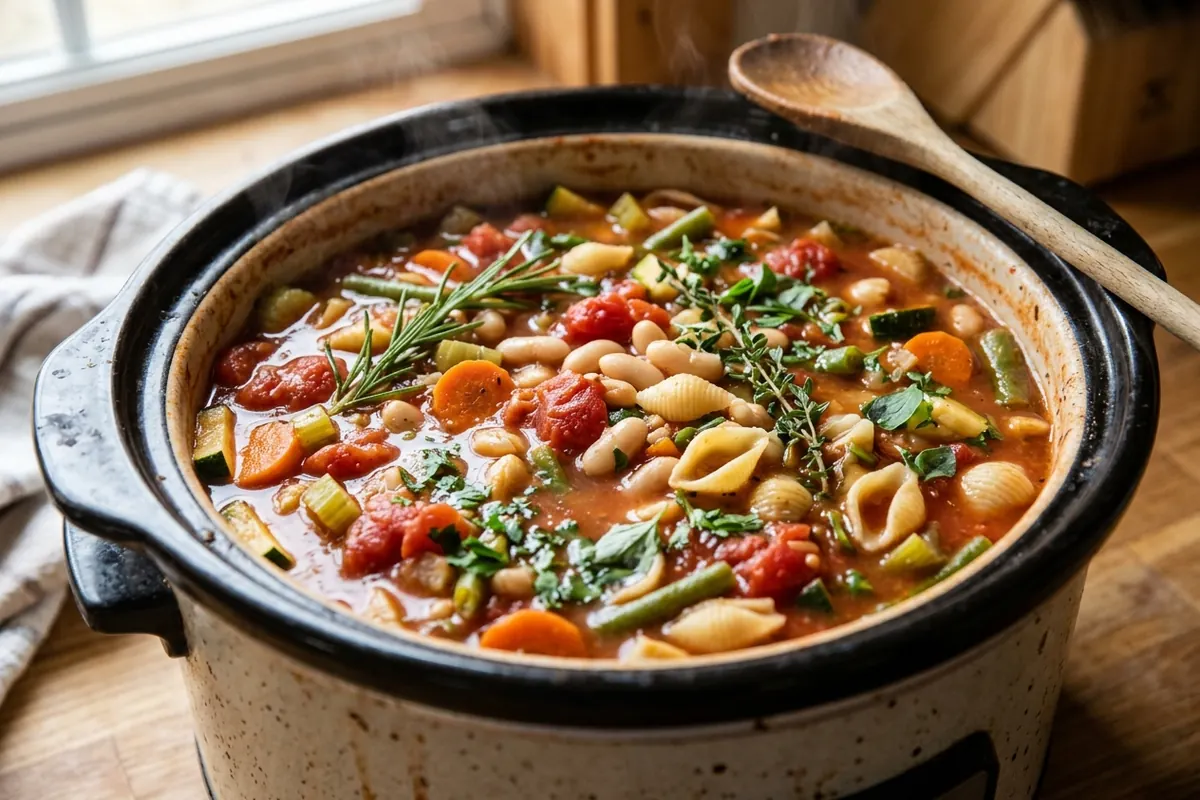
Everything in the base layer is happy to cook for the full six to eight hours on low. These are the sturdy, flavor-building ingredients that only get better with time:
- Aromatics: diced onion, carrots, and celery, the classic soffritto that gives the soup its backbone. A few cloves of minced garlic go in here too.
- Tomatoes: a 28-ounce can of diced or crushed tomatoes, plus a couple of tablespoons of tomato paste for depth and a little sweetness.
- Beans: one or two cans of beans, drained and rinsed. Cannellini, great northern, and dark red kidney are the usual picks. You can mix two kinds.
- Broth: about 6 to 8 cups of vegetable or chicken broth. Low-sodium gives you control over the final seasoning.
- Herbs: a couple of bay leaves, a sprig of rosemary, and dried oregano or Italian seasoning. Fresh basil and parsley go in at the end, not now.
- A parmesan rind: the single best flavor upgrade in the whole pot, covered in its own section below.
Stir all of that together, cover, and cook on low for 6 to 8 hours or high for 3 to 4. That is the entire hands-off portion. Resist the urge to add the pasta and zucchini now; they will not survive.
The Parmesan Rind Trick
If you take one thing from this guide, take this: save your parmesan rinds and drop one into the pot at the start. As the soup simmers, the rind slowly releases a deep, salty, savory flavor that you cannot get any other way, the same glutamate-rich umami that makes a long-cooked Italian soup taste so satisfying. It does not make the soup taste cheesy. It just makes it taste fuller, rounder, and more like it came from someone’s nonna.
Buy a wedge of real Parmigiano-Reggiano, use the cheese, and stash the rind in a freezer bag. It keeps for months. When the soup is done, fish the softened rind out with tongs and discard it, or, if you are like me, eat the chewy, melted bit as a cook’s snack. The editors at America’s Test Kitchen have long championed the parmesan rind as a near-free flavor booster for exactly this kind of soup, and once you start saving them you will find a use for every one. If you do not have a rind, a spoonful of grated parmesan stirred in at the end gets you part of the way there.
When to Add the Pasta, Zucchini, and Greens
This is the part that separates a good slow cooker minestrone from a disappointing one. Three ingredients need to go in late:
- Zucchini: add it about 30 minutes before serving, switched to high. Any earlier and it turns to mush and loses its color.
- Pasta: small shapes like ditalini, small shells, or elbows go in for the last 20 to 30 minutes on high, just long enough to cook through.
- Tender greens: baby spinach, chopped kale, or escarole wilt in the last 5 minutes. Frozen green beans go in around the same window if you like them semi-crisp, or a touch earlier for softer beans.
A simple late-stage timeline: when the base has cooked all day, turn the cooker to high, add the zucchini and pasta, and cook 25 minutes. In the final 5 minutes, stir in the spinach and any frozen green beans, plus the fresh basil and parsley. Taste, adjust the salt, fish out the bay leaves and rosemary stem, and you are done.
The Pasta Problem, and How to Beat It
Pasta is the trickiest ingredient in any minestrone, slow cooker or not. Cooked in the soup, it keeps absorbing liquid even after the heat is off, so a pot that was perfect at dinner can be a starchy, bloated mass by the next day. There are two good ways around this.
The first is to cook the pasta right in the pot at the end, as described above, and simply accept that leftovers will thicken. You can loosen them with a splash of broth or water when reheating.
The second, and my preferred method if I know I will have leftovers, is to cook the pasta separately in salted water, drain it, and add a scoop to each bowl at serving time rather than into the whole pot. The soup base stores and freezes beautifully on its own, and the pasta stays toothsome because it never sits in liquid. This is the same logic behind keeping noodles out of a stored batch built on good homemade stock, where the broth is the thing you want to protect. If you are batch-cooking minestrone for the week, cook the pasta on the side.
Choosing the Right Beans and Pasta
Canned beans are the practical choice for a slow cooker because dried beans can stay stubbornly hard in the acidic, tomato-heavy environment of minestrone, sometimes refusing to soften no matter how long they cook. Acid slows down the softening of dried beans, and minestrone is acidic by nature. Drained and rinsed canned beans sidestep that problem entirely and turn creamy in a couple of hours.
Cannellini are the classic, mild and creamy. Dark red kidney beans hold their shape and add color. Great northern and navy beans melt slightly and help thicken the broth. A blend of two looks and tastes best. For a naturally thicker soup, puree one cup of the beans with a cup of the broth before adding, which gives the whole pot more body without flour or cornstarch.
For pasta, stick to small shapes. Ditalini is the traditional minestrone pasta, but small shells, elbows, tubetti, or even broken spaghetti all work. Avoid large shapes, which cook unevenly in the gentle heat of a slow cooker and crowd the spoon.
Building the Vegetable Mix
Because minestrone is defined by its method rather than a fixed ingredient list, the vegetables are where you get to make it your own. The smart way to think about it is in two groups: sturdy vegetables that go in at the start with the base, and tender ones that go in at the end. Sorting your produce this way is the single most useful habit for slow cooker soup.
The sturdy group includes carrots, celery, onion, and potatoes if you want a heartier bowl. Diced butternut squash or sweet potato also hold up well over a long cook and add a gentle sweetness that plays against the tomato. Cabbage, often found in traditional minestrone, can go in early because it softens slowly and adds body. These vegetables all benefit from the full six to eight hours.
The tender group is everything that turns to mush if you leave it too long: zucchini, yellow squash, fresh green beans, peas, and leafy greens like spinach, kale, escarole, or chard. These go in during the last 5 to 30 minutes depending on how soft you want them. Kale is sturdier than spinach and can take 20 minutes; spinach needs only a few. A handful of frozen peas can go in at the very end and warm through in the residual heat.
A classic Italian touch is to keep the vegetable cut small and uniform so every spoonful carries a bit of everything. Dice things to roughly the size of the beans and pasta. That uniformity is part of what makes a good minestrone feel cohesive rather than like a bowl of random chunks.
Troubleshooting a Pot That Went Wrong
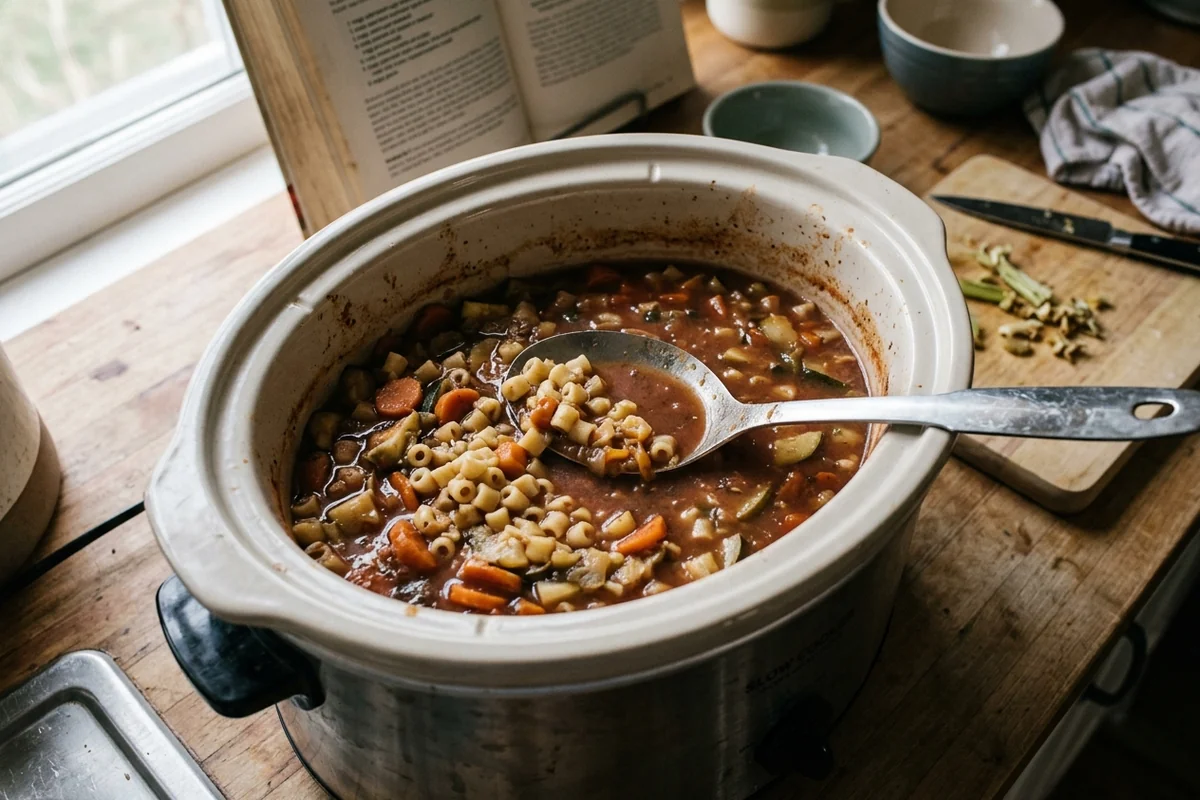
Even an easy soup can drift off course, and most minestrone problems have quick fixes once you know the cause.
- Vegetables turned to mush: the tender ones went in too early. Next time, hold the zucchini, squash, and greens until the final half hour. There is no rescuing an over-soft batch, but pureeing part of it into a smoother soup hides the texture.
- Pasta is bloated and gummy: it sat in the broth too long, in cooking or in storage. Add a splash of broth to loosen it, and next time cook the pasta separately if you expect leftovers.
- Beans are still hard: you used dried beans in the acidic tomato base. Always reach for canned, or pre-cook dried beans before they meet the tomatoes.
- Soup tastes flat: it needs salt and acid, not more cooking. Add salt gradually, then a squeeze of lemon or splash of vinegar, and finish with fresh herbs and grated parmesan.
- Too salty: the broth, parmesan rind, and any canned beans all contribute salt. Dilute with a little unsalted broth or water, and add a peeled raw potato for 20 minutes to absorb some of it.
Seasoning, Acid, and the Finishing Touches
Long-cooked soups can taste flat at the end even when every ingredient was right, because slow heat dulls bright flavors over time. The fix is to season in two stages. Salt lightly at the start so the vegetables and beans absorb some seasoning, then taste and correct at the very end. The parmesan rind and broth both add salt as they cook, so go easy early and adjust later.
The other end-of-cook move is a hit of acidity and freshness. A squeeze of lemon or a splash of red wine vinegar wakes the whole pot up, cutting through the richness of the beans and tomato, a finishing move that cooks at Bon Appetit reach for on almost any long-cooked dish. Stir in fresh basil and parsley off the heat so they stay green and fragrant. A drizzle of good olive oil over each bowl and a shower of grated parmesan finish it. If your minestrone ever tastes a little thin or watery, you can thicken it the same way you would any soup; my full breakdown of how to thicken soup without ruining the flavor covers the bean-puree, pasta-starch, and reduction methods that work best here.
Make-Ahead, Storage, and Freezing
Minestrone is a champion make-ahead soup as long as you handle the pasta wisely. The base, beans, vegetables, and broth keeps in the fridge for 4 to 5 days and freezes for up to 3 months. Cool it fully, then transfer to airtight containers, leaving a little headspace if freezing because the liquid expands.
If you cooked the pasta in the pot, expect it to drink up broth in storage; add liquid when you reheat and do not be surprised if the noodles soften further. If you kept the pasta separate, you have the best of both worlds: a freezer stash of soup base that reheats like new, plus fresh-cooked pasta added per bowl. Reheat gently on the stove or in short bursts in the microwave, stirring so the beans do not scorch on the bottom.
For a heartier cold-weather table, minestrone sits comfortably alongside other long, hands-off pot meals. If you like this style of set-it-and-forget-it cooking, the same principles carry straight over to a fall-apart slow cooker beef stew, where sturdy ingredients go in early and the tender ones get protected until the end. For more meatless soup-and-bowl ideas to round out the rotation, the vegan bowl collection is a useful next stop.
Frequently Asked Questions
Can I put dried pasta straight into the slow cooker?
Yes, but only at the end. Add small dried pasta during the last 20 to 30 minutes on high. If you add it at the start it turns to mush and falls apart. For leftovers, cook the pasta separately and add it per bowl so it does not bloat in storage.
Do I have to saute the vegetables first?
No. A true dump-and-go minestrone works fine with raw aromatics straight into the pot. Sauteing the onion, carrot, and celery in a little oil first does build a slightly deeper flavor, so do it if you have five minutes, but it is genuinely optional for this soup.
Can I use dried beans instead of canned?
It is risky. The acidity from the tomatoes can keep dried beans hard for a very long time, sometimes the whole cook. If you want dried beans, soak and pre-cook them until nearly tender before adding, or add the tomatoes only in the last hour. Canned beans are far more reliable here.
How do I make slow cooker minestrone vegan?
Use vegetable broth, skip the parmesan rind, and finish with a little nutritional yeast or a splash of white miso stirred in at the end for the savory depth the cheese would have provided. The rest of the soup is naturally plant-based.
Why is my minestrone watery?
Usually too much broth or not enough starch. Puree a cup of the beans into the broth, let it cook uncovered for the last half hour to reduce, or add a little more pasta. Tomato paste at the start also helps build body.
Can I cook it on high the whole time?
You can, in about 3 to 4 hours, but low and slow gives the beans and aromatics more time to soften and the parmesan rind more time to work. If you have the day, low is better. Either way, the pasta and zucchini still go in only at the end.
The Bottom Line
Slow cooker minestrone is as easy as soup gets, but the easy part hides one real rule: load the sturdy base in the morning and protect the pasta, zucchini, and greens until the final half hour. Save a parmesan rind for the pot, lean on canned beans so nothing stays hard, and finish with fresh herbs and a squeeze of acid to brighten the long cook. Do that, and you get a deep, satisfying bowl that tastes like it simmered on the stove all day, with almost none of the work. Cook the pasta on the side when you want leftovers, and a single pot will feed you well for the better part of a week.