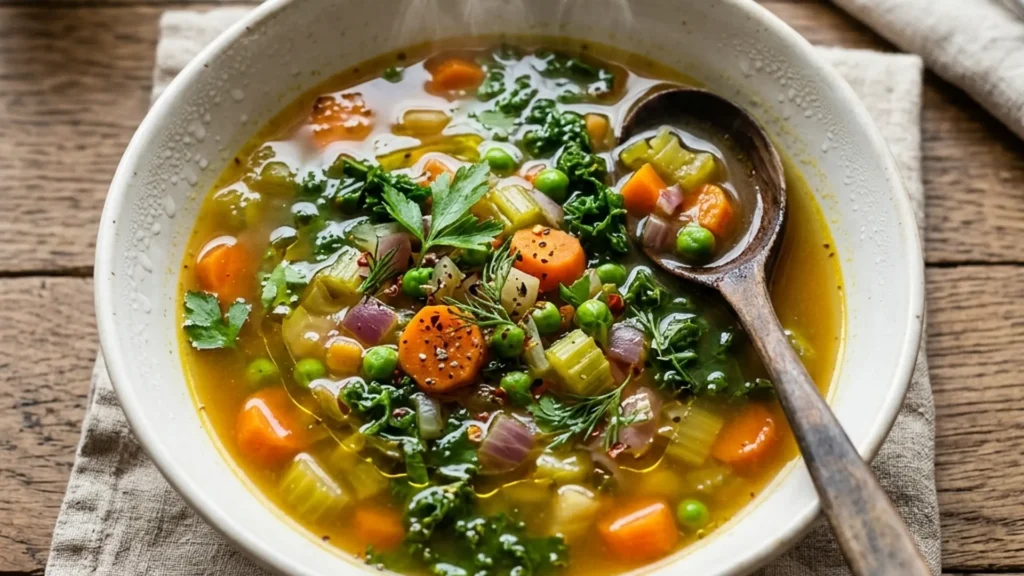
Easy cook soup is less about a recipe and more about a method you can run with whatever is in the kitchen, and once it clicks you will stop reaching for the can. The short version: sweat aromatics in fat, add hardy vegetables and a starch or protein, pour in enough liquid to cover by an inch, simmer at a bare bubble until everything is tender, then season hard at the end. Master that one sequence and you can build a pot in 20 to 45 minutes without a recipe in front of you.
I have made soup almost every week for years, and the thing that changed my cooking was realizing that the formula barely moves. Tomato soup, lentil soup, a clean-out-the-crisper vegetable pot, even a quick noodle bowl all run the same five beats. What follows is that method spelled out with real numbers, plus the troubleshooting fixes and storage rules most roundups skip. Learn it once and a half-empty fridge stops being a problem and starts being a soup.
The five-beat method behind every easy soup
Every soup I make follows the same rhythm. The ingredients change, the beats do not.
- Sweat the aromatics. Two tablespoons of fat (olive oil or butter), then diced onion, carrot, and celery over medium heat for 8 to 10 minutes until soft and smelling sweet. Add garlic for the last minute so it does not scorch. This base, called a mirepoix, is the flavor floor of the whole pot.
- Bloom the seasoning. Stir in dried herbs, tomato paste, or spices and cook 60 seconds in the hot fat. Blooming dried oregano or cumin in oil pulls out two or three times the flavor you get from dumping it into liquid later.
- Add the body. Hardy vegetables, beans, a starch, or a protein go in next. Give the harder ones a head start so the timing lands even.
- Cover with liquid and simmer. Pour in stock or water to cover the solids by about an inch. Bring it up, then drop to a bare simmer until everything is tender.
- Season and finish. Salt to taste, brighten with acid, and add anything delicate (fresh herbs, spinach, cooked pasta) right at the end.
That is the entire skill. A beginner who internalizes these five beats will out-cook someone chasing a printed recipe they do not understand, because you can adapt the method to any ingredient on the fly.
The master ratio that scales to any pot size
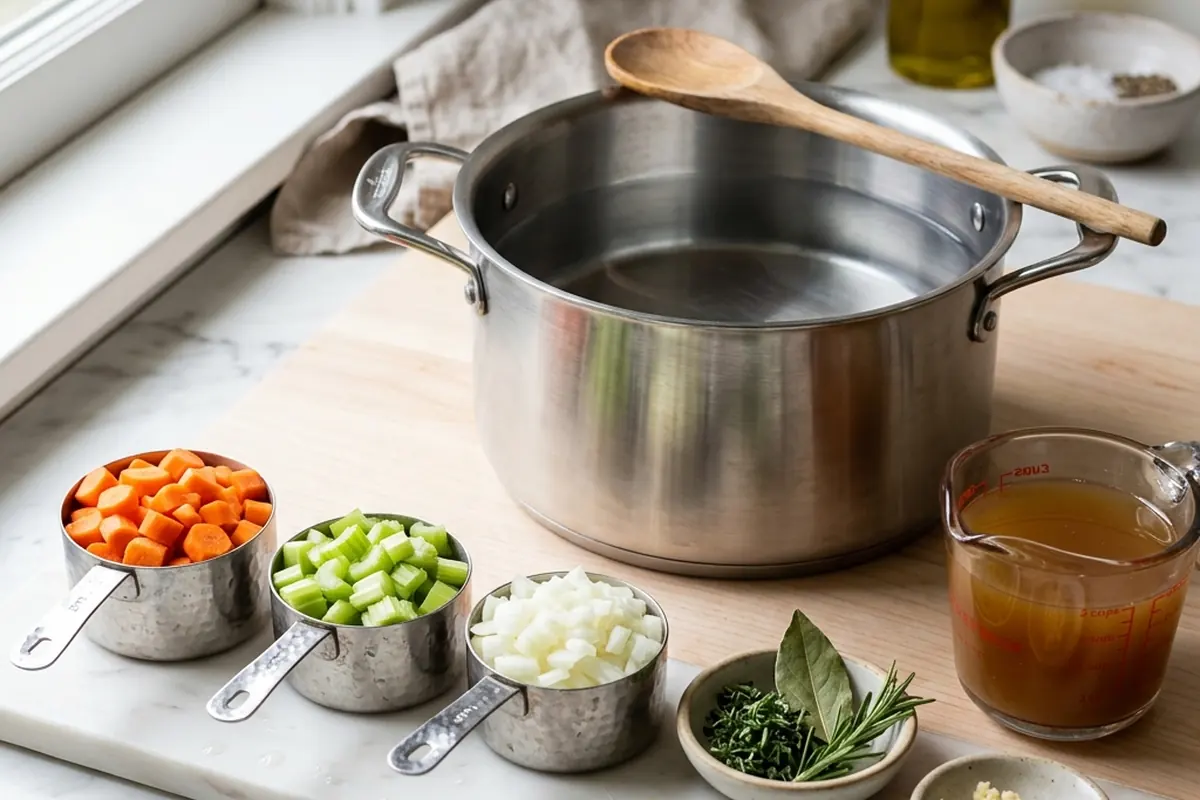
Here is the part the recipe blogs almost never give you: a ratio that scales. Most pages hand you one fixed recipe. Memorize this instead and you can build a pot of any size. Everything is keyed to one quart of finished soup, which feeds about two people as a main or four as a starter.
| Component | Amount per 1 quart liquid |
|---|---|
| Fat (oil or butter) | 1 tablespoon |
| Aromatics (onion, carrot, celery) | 1.5 cups diced total |
| Garlic | 2 cloves, minced |
| Body (veg, beans, grain, protein) | 2 to 3 cups |
| Liquid (stock or water) | 1 quart (4 cups) |
| Salt (start here, then taste) | 3/4 teaspoon kosher |
| Acid finish (lemon or vinegar) | 1 to 2 teaspoons |
Doubling for a family? Double every line. Want it heartier? Push the body toward 3 cups and the liquid stays put. Want it brothier? Pull body back to 2 cups. The ratio bends but never breaks, which is exactly what a fixed recipe cannot do for you.
The 20-minute versus 45-minute decision tree
Time is the real question on a weeknight, not which soup is “best.” So sort by the clock. This is the call I make standing at the open fridge.
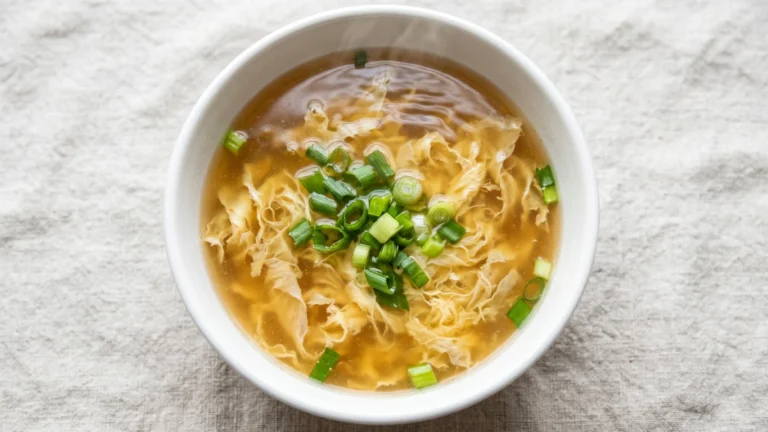
If you have 20 minutes, reach for ingredients that are already cooked or cook fast: canned beans, frozen vegetables, baby spinach, eggs for a quick egg-drop style, or thin pasta like orzo. Sweat your aromatics, bloom seasoning, add the quick stuff and hot stock, and you are eating in the time it takes to set the table. A canned-bean and tomato soup is genuinely 18 minutes start to bowl.
If you have 45 minutes, you can use raw ingredients that need real simmer time: dried red lentils (20 to 25 minutes), diced winter squash, potatoes, or shredded chicken thighs poached right in the broth. The extra time also lets flavors marry, which a 20-minute pot never fully gets.
Then layer the second question on top: what is the most perishable thing in your fridge? That wilting bunch of greens, the half bag of mushrooms, the lonely zucchini. Soup is the best way I know to rescue produce before it turns, and building the pot around the thing most likely to spoil means almost nothing gets wasted. I keep a running mental note of what needs using, and Sunday’s soup is usually whatever lost the race.
Get the simmer right, or the soup turns out wrong
Here is a detail that separates a clean bowl from a cloudy, blown-out one, and almost no easy-soup roundup mentions it. The target is a bare simmer, roughly 185 to 205 degrees F, where you see lazy bubbles breaking the surface every second or two, not a rolling boil. A hard boil tears delicate ingredients apart, turns beans to mush on the outside while the inside is still firm, and emulsifies fat into the liquid so the soup goes greasy and cloudy.
If you are simmering chicken or making broth from scratch, this matters even more. A gentle simmer keeps the liquid clear and the meat tender; a boil makes both tough and murky. When the soup looks like it is climbing toward a boil, just nudge the burner down a notch. You want patience, not power. For a deeper walk through building a clear, flavorful base, my guide to vegetable beef soup shows the same low-and-slow simmer in action with meat in the pot.
Fix it fast: the soup troubleshooting table
Even an easy pot can go sideways, and knowing the fix in real time is what keeps you calm at 6 p.m. Here are the five problems I run into most and exactly how I correct each one.
| Problem | Why it happened | The fix |
|---|---|---|
| Too salty | Salted early plus reduction | Add water or unsalted stock; toss in a peeled raw potato to simmer 15 min and pull it; a splash of acid masks salt. |
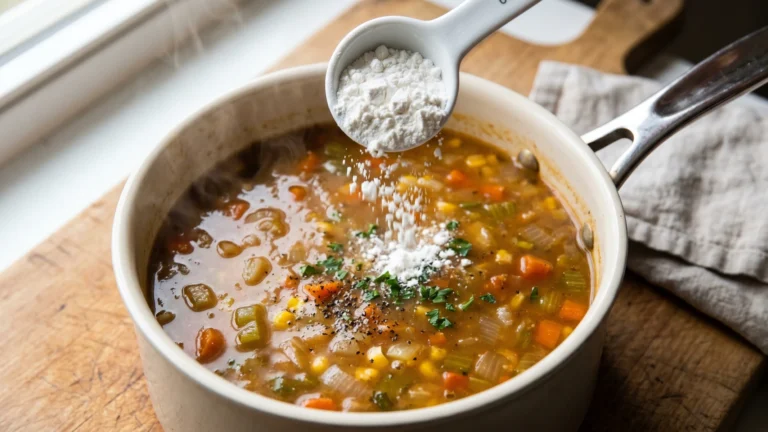
| Too thin | Too much liquid | Simmer uncovered to reduce; or blend 1 cup of the soup and stir it back; or whisk in 1 Tbsp cornstarch slurried in cold water. |
| Too thick | Starch kept drinking liquid | Loosen with hot stock or water, a quarter cup at a time, then re-check salt. |
| Bland | Under-salted or no acid | Salt first; if still flat add lemon, vinegar, or a parmesan rind; umami from soy or fish sauce wakes it up. |
| Greasy surface | Boiled too hard or fatty meat | Skim with a spoon; drop heat to a bare simmer; chill and lift the fat cap if you have time. |
The two I lean on most are acid and a potato. A squeeze of lemon at the end fixes “something is missing” nine times out of ten, and the raw-potato trick really does pull back an over-salted pot if you catch it early. If you want to go deeper on thickening without starch lumps, the homemade tomato soup guide covers blending and cream-finishing in detail.
Pantry and freezer staples that make soup effortless
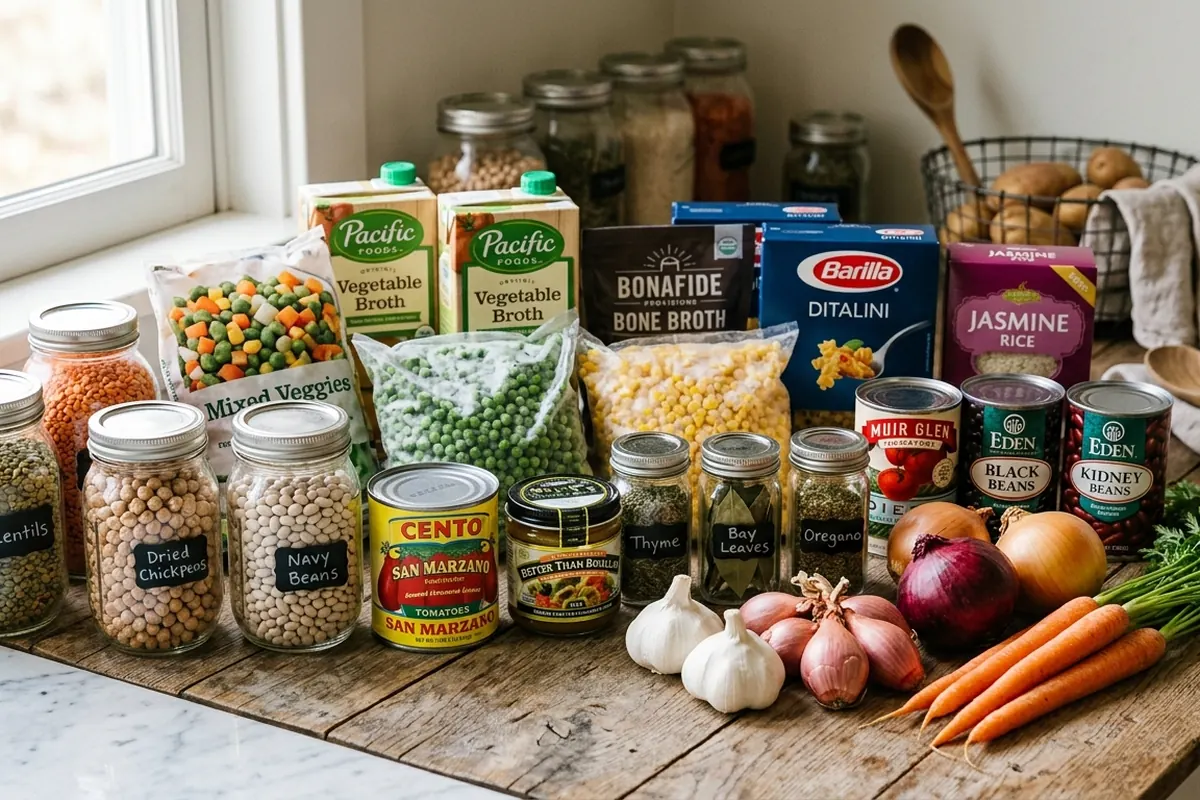
Easy soup gets a lot easier when the building blocks are already in the house. I keep a short list stocked so a pot is never more than a few minutes of prep away.
- Aromatics: onions, carrots, celery, garlic. These keep for weeks and start every pot.
- Canned beans and tomatoes: instant body and acidity, zero soak time. A can of cannellini turns thin broth into a meal.
- Dried lentils: red lentils cook in about 20 minutes and thicken as they go, no pre-soak needed.
- Good stock: boxed low-sodium works, but homemade is better and cheaper. If you want control over the salt and flavor, learn to make your own.
- Acid and finishers: lemon, red wine vinegar, parmesan rinds in a freezer bag, miso paste. These are the flavor switches you flip at the end.
- Frozen vegetables: peas, corn, spinach, mirepoix blends. They go straight into the pot and shave real time off prep.
The single highest-leverage upgrade is your stock. A pot built on flavorful homemade stock barely needs anything else, while one built on water leans hard on salt to compensate. My walkthrough on how to make soup stock covers scraps-to-stock so you stop buying boxes. America’s Test Kitchen has run side-by-side tastings showing how much the stock choice swings the final bowl, and their findings line up with what I taste at home; their work at America’s Test Kitchen is worth a read if you want the data behind it.
Blended or chunky: how to decide
This is a small fork in the road that changes the whole feel of a soup, and it is purely a choice, not a rule. Blend when you want a smooth, comforting bowl: tomato, butternut squash, potato leek, anything you want to feel like a hug. Leave it chunky when texture is the point: minestrone, chicken and vegetable, bean soups where you want to bite into things.
My honest preference leans chunky for everyday soups because it feels more like a meal and skips the cleanup of a blender. But for a dinner-party first course, smooth wins on presentation every time. If you do blend, an immersion blender right in the pot beats hauling out a countertop blender, and you avoid the hazard of pouring hot liquid into a sealed jar (which can erupt). When you use a standing blender, never fill it more than two-thirds and crack the lid to vent steam. Bon Appetit has a good primer on hot-liquid blending safety, and their guidance over at Bon Appetit matches what I tell anyone new to pureeing soup.
Storing and reheating so leftovers taste fresh
Soup rewards batch cooking, but only if you store it right. Cooled soup keeps in the fridge for 3 to 4 days in an airtight container. For longer, freeze it, where most broth-based and bean soups hold their quality for up to 3 months.
A few storage rules I treat as non-negotiable. Cool the pot quickly before it goes in the fridge or freezer; a hot mass cools slowly and sits in the bacterial danger zone too long, so use an ice bath or pour into shallow containers to drop the temperature inside two hours. Leave headspace in freezer containers because liquid expands as it freezes. And know what does not freeze well: potatoes turn grainy, dairy can separate, and pasta or rice bloats into mush. The workaround is to freeze the base and add the starch or cream fresh at reheat.
When you reheat, do it gently over medium-low and stir, and taste again before serving. Cold storage dulls seasoning, so a fresh pinch of salt, a crack of pepper, or a squeeze of lemon brings a thawed bowl right back to life. I almost always re-season leftover soup, and that one habit is why it never tastes like sad reheated leftovers.
Five flavor switches that rescue a boring pot
Most flat soup is not broken, it is just under-built. When a pot tastes thin even after salting, I reach for one of five flavor switches before I give up on it. Each one adds a different kind of depth, and you can stack two or three.
- Umami: a parmesan rind dropped in to simmer, a teaspoon of miso paste whisked in off the heat, a splash of soy or fish sauce, or a spoon of tomato paste browned in the pan. These add the savory backbone that water-based soups lack.
- Acid: lemon juice, red or white wine vinegar, or a spoon of sauerkraut brine, always added at the very end. Acid does not make soup sour in small amounts; it makes every other flavor pop into focus.
- Fat: a swirl of good olive oil, a knob of butter, or a spoon of cream stirred in at the finish carries flavor across your palate and rounds off any harsh edges.
- Heat and warmth: a pinch of red pepper flakes, smoked paprika bloomed in the oil, or fresh ginger grated in. Warmth gives a soup somewhere to go instead of sitting flat.
- Fresh on top: chopped parsley, cilantro, scallions, a few croutons, or a crack of black pepper at the table. The contrast between the cooked broth and a fresh, raw garnish is what makes a homemade bowl taste alive.
The order I try them in is acid first, then umami, then fat, because acid is free and instant and fixes the most common complaint. A pot that still feels dull after a real pinch of salt almost always wants a squeeze of lemon, not more simmering. I learned that the slow way, by over-reducing soups for an hour trying to “build flavor” when 30 seconds and a lemon wedge would have done it.
One more habit worth building: taste constantly, and taste from a spoon you have let cool for a second, not straight off the bubbling surface. Heat masks salt, so a soup that tastes perfectly seasoned scalding hot will often taste flat once it cools to eating temperature. I season a touch past what seems right when the pot is very hot, then check it again warm. It is a small thing that quietly fixes a lot of bland bowls.
Frequently asked questions
What is the easiest soup to make for a beginner?
A canned-bean and tomato soup is the easiest real soup to start with. Sweat an onion in oil, add a can of drained white beans, a can of crushed tomatoes, a teaspoon of dried oregano, and two cups of stock, then simmer 15 minutes and season. It teaches the whole five-beat method in under 20 minutes with almost nothing to chop.
How long does it take to cook soup from scratch?
Most easy soups land between 20 and 45 minutes. Quick soups built on canned beans, frozen vegetables, or thin pasta finish in about 20 minutes. Soups with dried lentils, raw root vegetables, or poached chicken need closer to 45 minutes so everything cooks through and the flavors marry.
Do I really need to saute the vegetables first?
You do not have to, but it is worth the 8 to 10 minutes. Sweating onion, carrot, and celery in fat builds a sweet, deep flavor base you cannot get by just boiling them. Skipping it gives you a thinner, flatter soup. If you are truly rushed, at least soften the onion before adding liquid.
How do I make a watery soup thicker?
Three reliable fixes: simmer it uncovered to reduce and concentrate; blend a cup of the soup and stir it back for body; or whisk in a tablespoon of cornstarch dissolved in cold water and simmer two minutes. Mashing some of the beans or potatoes already in the pot also thickens it naturally.
Can I make soup without stock?
Yes, water works in a pinch, but you will need to season more aggressively to make up for the lost flavor. Boost a water-based soup with a parmesan rind, a splash of soy sauce or miso, a bay leaf, and extra herbs. Better still, keep a bag of vegetable scraps in the freezer and simmer your own stock so water is never your only option.
How long does homemade soup last in the fridge?
Three to four days in an airtight container, cooled quickly before it goes in. If you will not finish it in that window, freeze it, where most broth and bean soups keep their quality for up to 3 months. Leave out potatoes, dairy, and pasta if you plan to freeze, and add them fresh when you reheat.
Bottom line
Easy cook soup is a method, not a recipe to memorize. Sweat your aromatics, bloom the seasoning, add the body, simmer at a bare bubble, then season and brighten at the end. Hold the master ratio in your head, sort your options by the clock, and keep the troubleshooting fixes handy, and you can turn almost any fridge into a pot of something good in under an hour. Do it a few times and you will stop reading recipes for soup altogether, because you will already know how.