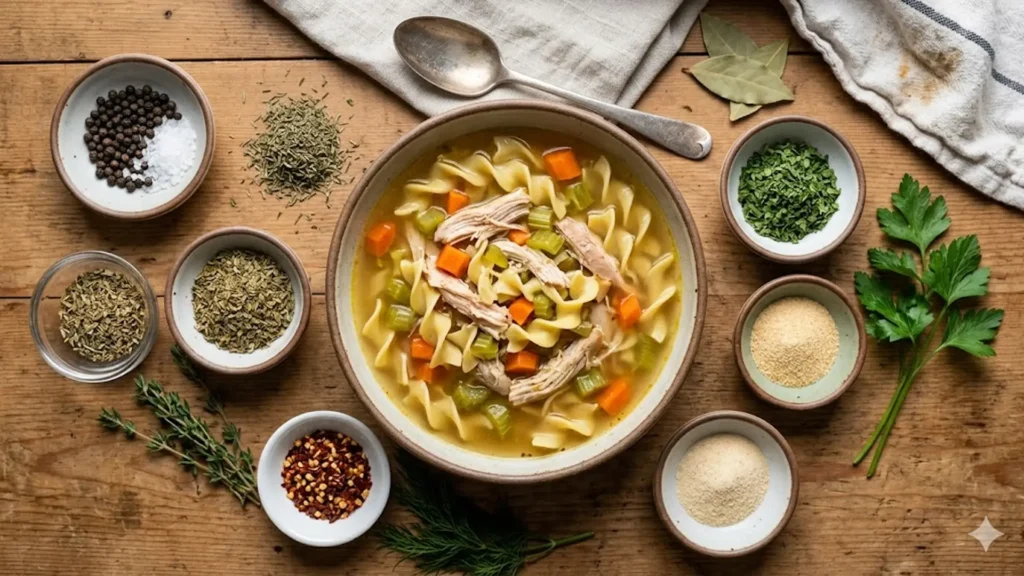
What spices go in chicken noodle soup is the question that separates a flat, watery bowl from one that tastes like it simmered all day, and the honest answer is that the classic version uses fewer spices than people expect but adds them with much better timing. Most home cooks make the same two mistakes. They under-season, ending up with bland broth that no amount of salt at the table can rescue, or they dump every dried herb in the cabinet in at once and get a muddy, dusty flavor. The real craft is knowing the small core of seasonings that belong in the bowl, when to add each one, and how to finish with brightness so the whole thing tastes alive rather than tired.
I am Elsie, and chicken noodle soup is the dish I have probably made more times than any other. In this guide I will give you the essential spice and herb lineup with amounts, explain the difference between dried and fresh and exactly when each goes in, share the umami boosters that add depth without anyone being able to name them, cover the acid that makes the difference at the end, and walk through global variations if you want to take the bowl somewhere new. By the end you will be able to season a pot by feel.
The Essential Core: What Always Belongs
A great chicken noodle soup is built on a surprisingly short list. The non-negotiables are salt, black pepper, thyme, and bay leaf, with garlic and onion forming the aromatic base that everything else sits on. That is genuinely most of it. Thyme is the signature herb of chicken soup, earthy and slightly minty, and it marries with chicken better than any other. A bay leaf or two simmered in the broth adds a subtle, almost tea-like background note you would miss if it were gone but cannot quite place when it is there. Salt and pepper are not optional seasonings here, they are structural, and the soup needs enough salt to make the chicken and vegetables taste like themselves.
For a standard pot serving six, I use about a teaspoon of salt to start and adjust upward, half a teaspoon of black pepper, a teaspoon of dried thyme or a tablespoon of fresh, and two bay leaves. From that base, everything else is a choice rather than a requirement.
The Supporting Cast: Herbs That Add Depth
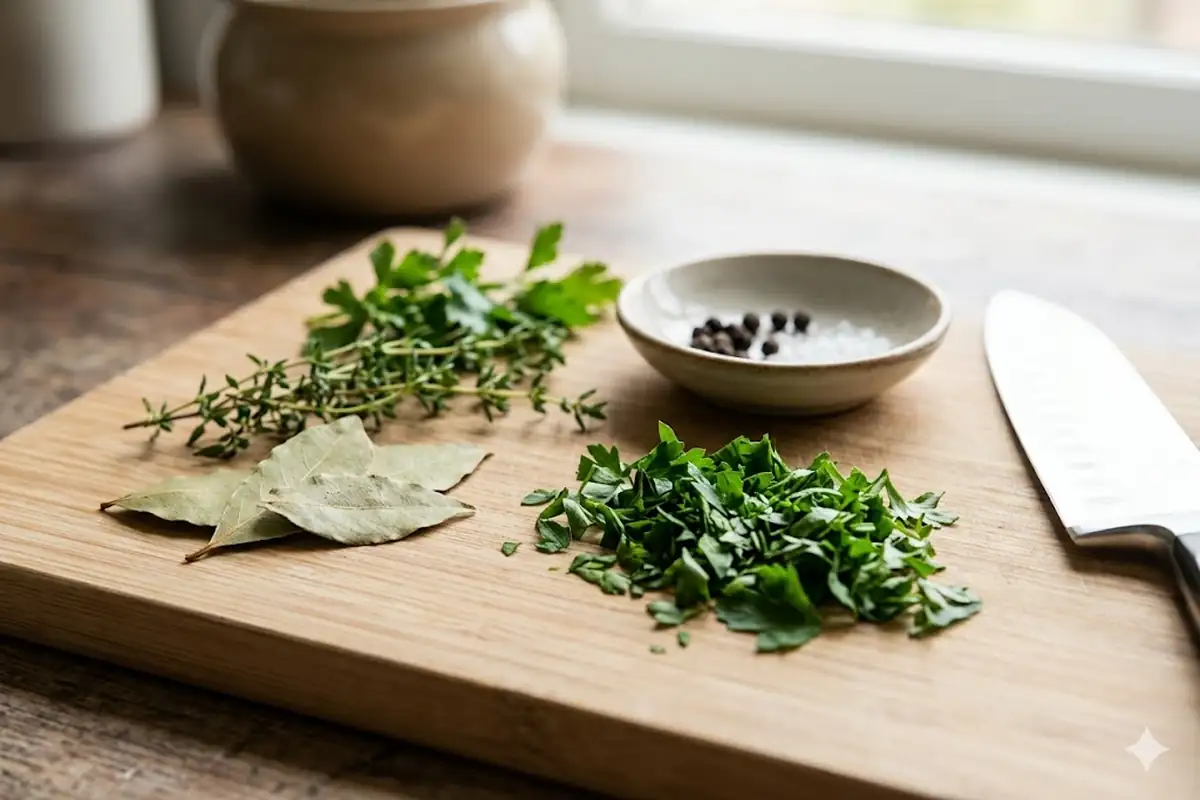
Beyond the core, a few more herbs round out the flavor. Parsley is the classic finishing herb, added fresh at the end for color and a clean, grassy lift. Rosemary in a small amount, an eighth of a teaspoon dried, adds a piney warmth, though it is strong so use a light hand. Dill is the move if you want a brighter, slightly Eastern European character that many people associate with their grandmother’s soup. A pinch of crushed red pepper flakes adds a gentle background warmth that you register as depth rather than heat. Italian seasoning, which bundles basil, oregano, thyme, and rosemary, is a convenient shortcut that gives a rounded herbal note in one spoonful, though I prefer building from individual herbs so I control the balance.
Two more worth knowing: a small pinch of celery seed reinforces the savory vegetable note when you do not have fresh celery on hand, and a whisper of rubbed sage adds a cozy, almost Thanksgiving warmth that suits a heartier bowl. Turmeric is sometimes added too, mostly for its golden color and a faint earthiness, though a little goes a long way before it turns bitter. None of these are essential, but each can nudge the soup toward a particular mood once you are comfortable with the core lineup.
The thing to resist is using all of these at once. Pick the core plus one or two supporting players. A pot with thyme, bay, parsley, and a whisper of red pepper is far better than one carrying eight competing herbs.
Fresh Versus Dried: The Rule and the Ratio
This trips up more cooks than any other point. Dried herbs are more concentrated than fresh, so the conversion is roughly one part dried to three parts fresh. If a recipe calls for a tablespoon of fresh thyme and you only have dried, use about a teaspoon. The timing differs too, and this matters as much as the amount. Dried herbs need time in the simmering liquid to soften and release their flavor, so add them early, when you saute the aromatics or when the broth first goes in. Fresh tender herbs like parsley, dill, and chives are delicate and lose their brightness if cooked, so stir them in during the last minute or sprinkle them over each bowl at serving. Hardy fresh herbs like thyme and rosemary can go in earlier on the stem, then you fish out the bare stems before serving.
When to Add Each Seasoning
Layering is the secret the simple recipes skip. Think of seasoning in three stages. First, bloom your dried spices and saute garlic and onion in fat at the start, because heat and oil unlock flavors that water alone cannot. Add dried thyme and any red pepper here. Second, the long simmer is for the bay leaves and hardy herbs, which need time to infuse the broth. Third, the finish is for salt adjustment, fresh tender herbs, and acid. Always taste the broth before the final salt, and taste again after the chicken goes in, because the meat absorbs seasoning and can leave the broth needing more. This staged approach is why a thoughtfully seasoned soup tastes layered rather than one-note, and it is the same principle that gives a long-simmered stew its depth, like the slow building of flavor in my crock pot beef stew.
The Umami Boosters Nobody Can Name
If your chicken noodle soup tastes correct but somehow thin, it is usually missing umami rather than salt. These are the secret-weapon additions that make people ask what you did. A teaspoon of chicken bouillon or a spoonful of a good chicken base deepens the savory backbone, especially if your stock is light. A small splash of fish sauce, just a teaspoon for the whole pot, disappears completely but makes everything taste more like itself. A parmesan rind simmered in the broth releases a savory richness. A teaspoon of soy sauce or a little miso does the same. Even a small amount of tomato paste browned with the aromatics adds a savory floor. None of these announce themselves in the finished bowl. They simply make the broth taste deeper and more satisfying, which is exactly what a great stock does on its own. If you want to understand why a real, gelatin-rich base matters so much, my honest look at whether beef broth is good for you explains the body that no amount of seasoning can fake.
What Each Spice Actually Does
It helps to understand the role each seasoning plays, so you can adjust by purpose rather than guesswork. Thyme provides the backbone, that warm, herbal note we read as chicken soup itself. Bay leaf works invisibly, adding a faint aromatic complexity that you only notice in its absence. Black pepper brings a gentle bite and a top note that keeps the broth from tasting dull. Garlic and onion build the savory floor that everything else stands on, which is why you saute them first. Parsley and other fresh herbs add color and a clean lift at the finish. Crushed red pepper adds depth disguised as a whisper of warmth. And salt, more than anything, is the amplifier that makes every other flavor audible. When your soup is off, identify which job is not being done. A muddy soup has too many competing herbs. A flat soup is short on salt or umami. A dull soup needs acid. A thin soup needs a better base. Diagnosing by role is faster than randomly adding more of everything.
Seasoning by Cooking Method
How you cook the soup changes how you season it. On the stovetop you have full control, so layer in three stages as described, tasting as you go. In a slow cooker, dried herbs and bay go in at the start since they have hours to infuse, but hold the fresh herbs, the acid, and the final salt adjustment until the end, because long cooking dulls bright flavors and concentrates salt. In a pressure cooker, use slightly less dried herb than you think, since the sealed environment intensifies everything, and finish with fresh herbs and lemon after releasing the pressure. If you are doctoring a canned or boxed soup, the fastest upgrades are a fresh squeeze of lemon, a handful of fresh parsley or dill, a crack of black pepper, and a little extra garlic bloomed in butter stirred through. Those few additions can make a convenience soup taste nearly homemade. Whatever the method, the principle holds: dried and hardy herbs go in early, delicate herbs and acid go in last.
The Acid Finish That Most Cooks Forget
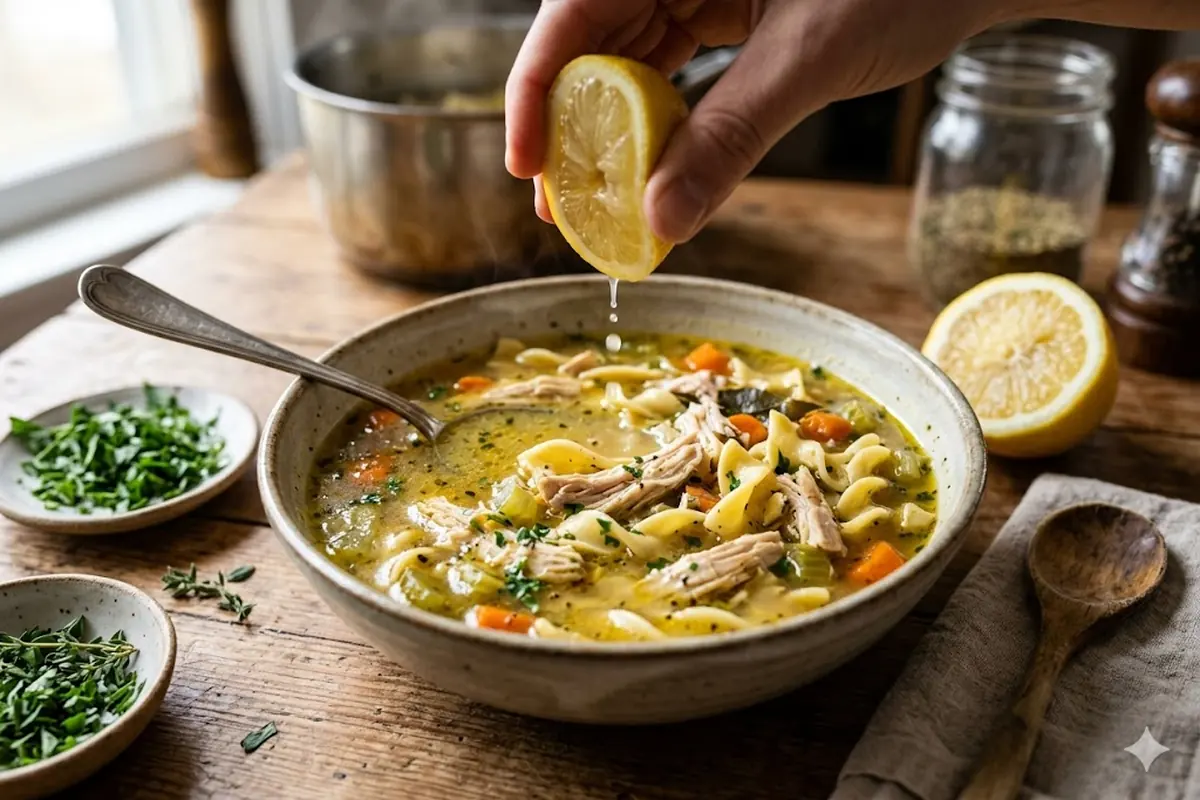
Here is the single most overlooked step in chicken noodle soup. At the very end, off the heat, add a squeeze of fresh lemon juice or a small splash of white wine vinegar. Just a teaspoon or two for the whole pot. You will not taste it as lemon or vinegar. What it does is lift and brighten every other flavor, cutting through the richness and making the broth taste fresh and lively instead of heavy. Almost every restaurant-quality soup has an acid finish, and almost every bland home soup is missing it. Add it last so the brightness survives, and adjust to taste. This one move does more to transform a dull bowl than any additional herb.
Global Variations: Taking the Bowl Somewhere New
Once you know the classic, you can steer chicken noodle soup toward other traditions with just a few spices. For a warming, restorative version, simmer the broth with a star anise pod, a cinnamon stick, and a few slices of fresh ginger, which gives a Vietnamese-inspired pho-like aroma. For a Greek lean, finish with extra lemon and a little dill. For a curried version, bloom a teaspoon of curry powder or turmeric with the aromatics and finish with coconut milk and cilantro. For a Mexican-inspired bowl, add cumin, a little oregano, and lime at the end with fresh cilantro. The chicken-and-noodle framework is endlessly adaptable, and the spice choices are what define the personality. For ideas on rounding out a cozy soup spread through the colder months, my roundup of the best fall soup bowls is a good companion.
Troubleshooting a Bland Bowl
If your soup tastes flat despite following a recipe, run through this quick diagnosis. Most often the fix is salt, so add a little more and taste, since under-salting is the number one cause of bland soup. If salt does not fix it, the problem is usually umami, so add bouillon, a parmesan rind, or a splash of fish sauce. If it tastes heavy or dull rather than weak, it needs acid, so add lemon or vinegar at the end. If it tastes one-dimensional, your seasoning probably all went in at once, so next time layer it in stages. And if the broth itself is thin, no seasoning will fully rescue it, which is why a good homemade stock is the foundation everything else builds on. Work through salt, umami, acid, and base in that order and you will almost always land the bowl.
Frequently Asked Questions
What is the main spice in chicken noodle soup?
Thyme is the signature herb of chicken noodle soup, with salt, black pepper, and bay leaf rounding out the essential core. Garlic and onion form the aromatic base. Thyme pairs with chicken better than any other herb, giving the broth its classic earthy, slightly minty character. Everything beyond these is a matter of personal preference rather than necessity.
How much thyme should I add to chicken noodle soup?
For a pot serving about six people, use roughly one teaspoon of dried thyme or one tablespoon of fresh. The conversion between them is about one part dried to three parts fresh, since dried herbs are more concentrated. Add dried thyme early so it has time to soften and release its flavor, and add fresh thyme on the stem during the simmer, removing the bare stems before serving.
Why does my chicken noodle soup taste bland?
The most common cause is too little salt, so add more and taste. If salt does not fix it, the soup likely needs umami from bouillon, a parmesan rind, or a splash of fish sauce. If it tastes heavy rather than weak, it is missing acid, so add a squeeze of lemon or a splash of vinegar at the end. A thin broth from weak stock can also be the root problem.
Should I use fresh or dried herbs in chicken noodle soup?
Both work, but they go in at different times. Dried herbs like thyme should be added early so they have time to infuse the broth. Delicate fresh herbs like parsley and dill should be added at the very end to preserve their brightness. Hardy fresh herbs like thyme and rosemary can simmer on the stem and be removed before serving. Use about three times as much fresh as dried.
What can I add to chicken noodle soup for more flavor?
For more depth without anyone naming the ingredient, add umami boosters like a teaspoon of chicken bouillon, a splash of fish sauce, a parmesan rind, or a little soy sauce. Finish with a squeeze of lemon juice off the heat to brighten everything. These additions disappear into the broth and simply make it taste richer and more satisfying than salt alone can.
Can I make chicken noodle soup spicy?
Yes. A pinch of crushed red pepper flakes added early gives gentle background warmth, while a dash of sriracha or a few slices of fresh chili at the end provides more direct heat. For a global twist, ginger and a little cayenne lean toward an Asian-inspired profile. Add heat gradually and taste, since it intensifies as the soup sits.
The Takeaway
What spices go in chicken noodle soup comes down to a tight core of thyme, bay, salt, and pepper on a garlic-and-onion base, then one or two supporting herbs and a few invisible boosters that do the heavy lifting. The seasonings matter less than the timing: bloom the dried spices, simmer the hardy herbs, and finish with fresh herbs and acid. Get the salt right, add a hit of umami, and never skip the squeeze of lemon at the end, and even a humble pot of chicken noodle soup will taste like it came from a much fancier kitchen. Keep your seasoning list short, lean on timing and the finishing acid, and reach for an umami booster whenever the broth feels thin, and you will rarely produce a bland pot again. For more on building flavor through technique, both America’s Test Kitchen and Bon Appetit are reliable places to go deeper.