White chicken chili keto is the version of this creamy, green-chile-laced comfort bowl that drops the beans and the flour but keeps every bit of the warmth and body you actually want from a pot of chili. I have made a lot of soup in my kitchen, and the recipe people get wrong most often is this one, because they treat the beans as flavor when really they were doing the work of thickening. Take them out without a plan and you get watery chicken broth with sad shredded meat floating in it. Take them out with a plan, and you get a bowl that is thicker, richer, and more satisfying than the original. This guide is about that plan, top to bottom.
I am Elsie, and most of what I cook in a season is soup and stew, so I am going to walk you through this the way I would if you were standing at my stove. We will cover the carb math, how to build flavor without a long ingredient list, three cooking methods with real timings, every thickening trick that actually works on keto, and the substitutions that hold up versus the ones that collapse. By the end you should be able to make this without a recipe card in front of you.
Why Traditional White Chicken Chili Is Not Keto
A standard pot of white chicken chili leans on cannellini or great northern beans. One cup of cooked white beans carries roughly 35 grams of total carbohydrate and about 24 grams net after fiber. A typical recipe uses two cans, so the beans alone can push a single bowl past 20 grams net carbs before you count anything else. On top of that, many versions thicken with a flour roux or a cornstarch slurry, and some add a little masa or crushed tortilla chips for body. Stack all of that together and you are looking at a dish that quietly runs 30 grams of net carbs per serving or more.
Keto generally caps you somewhere around 20 to 25 grams of net carbs for an entire day, so one bowl of the classic recipe can eat your whole budget. The good news is that almost all of those carbs come from ingredients that were never the point. Nobody loves white chicken chili because of the beans. They love it because of the creamy base, the green chiles, the cumin, and the tender chicken. Remove the carb-heavy parts, replace the body they provided, and the soul of the dish is untouched.
The Carb Math: What a Keto Bowl Actually Costs
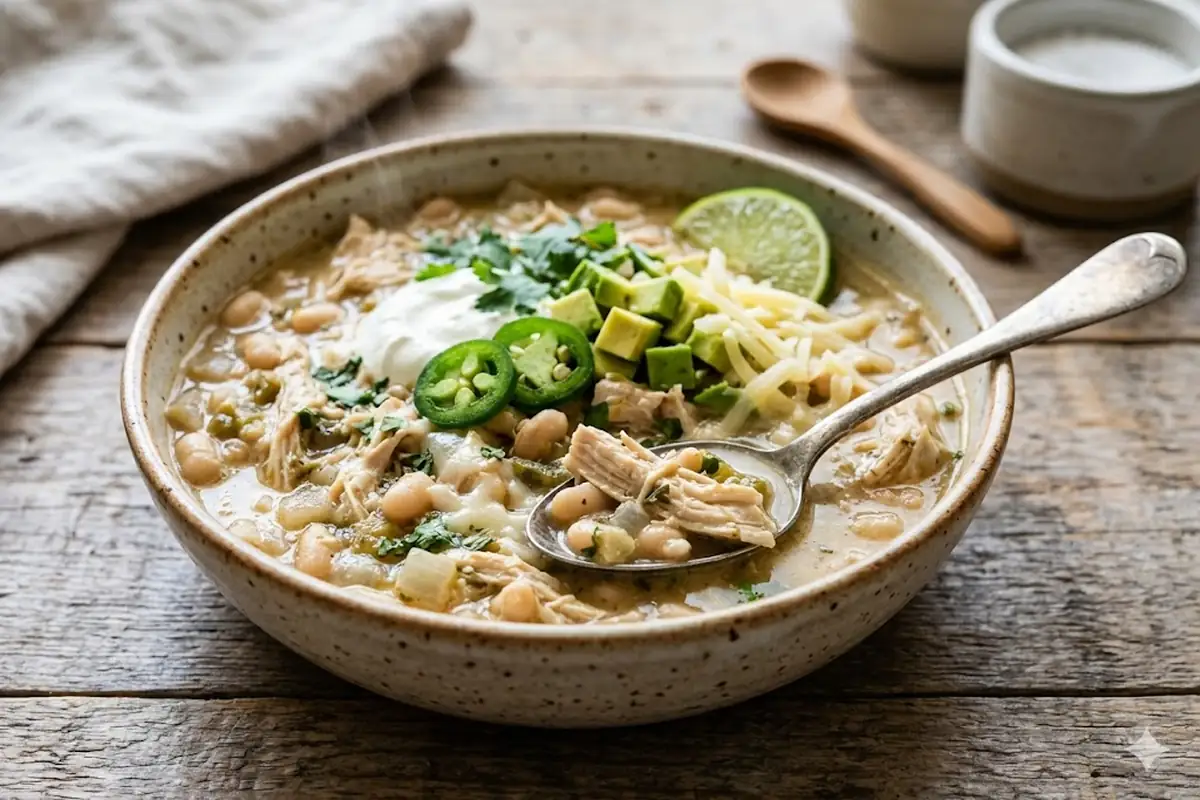
A well-built keto white chicken chili lands between 5 and 7 grams of net carbs per serving. The leading low-carb versions report numbers like 5.7 grams and 6.5 grams net per bowl, and those are honest figures once you account for the cream cheese, the green chiles, and a small amount of aromatics. My own pot, divided into six servings, comes in around 6 grams net, roughly 350 calories, 20 grams of fat, and 30 grams of protein per bowl. That fat-to-protein ratio is exactly what you want on keto: enough fat to keep you full, enough protein to actually be a meal.
Where do those few carbs come from? Mostly the green chiles and the cream cheese, plus whatever you use for a little aromatic backbone. A 4-ounce can of diced green chiles spread across six servings is negligible per bowl. Cream cheese carries about 1 gram of carb per ounce. If you add half an onion to the whole pot, that is maybe 1 gram per serving. The math stays friendly as long as you do not sneak beans back in or pour in a sweetened broth.
Building Flavor Without Beans or Flour
The flavor base of this dish is small but it has to be precise. Cumin is the lead note, with dried oregano right behind it, and a pinch of cayenne or a diced jalapeno for heat. Garlic and a little onion give the savory floor. The green chiles bring that mild roasted-pepper tang that makes the dish read as Southwestern rather than just creamy chicken soup. Toast your cumin and oregano in the fat for thirty seconds before any liquid goes in. Dry spices are oil-soluble, and blooming them in hot fat pulls out flavor that you simply do not get if you dump them into broth.
Use real chicken stock, not water with a bouillon cube, because the stock is carrying a lot of the body once the beans are gone. If you want to understand why a good stock matters so much and how gelatin from bones gives soup its rich mouthfeel, my honest look at beef broth and its benefits covers the same principle that applies directly to any broth. A bowl of soup is only ever as good as the liquid it is built on, and on keto where you have removed the starch, that becomes even more true.
Cream Cheese: The Keto Thickener That Does Double Duty
Cream cheese is the single most important swap in this recipe. It does two jobs at once. It thickens the chili to that velvety, coat-the-spoon texture the beans used to provide, and it adds a tangy richness that makes the whole pot taste more luxurious. Use a full 8-ounce block for a six-serving pot. Two rules keep it from clumping: bring it to room temperature first so it is soft, and cut it into cubes before it goes in. Stir over low heat and give it a couple of minutes to melt completely. If you are impatient, an immersion blender will smooth out any stubborn lumps in seconds.
Heavy cream layered in at the end adds another dimension of richness and helps loosen the chili if the cream cheese took it too thick. A quarter to a third of a cup for the pot is plenty. Add it off the boil, because cream can break if you let it rip at a hard simmer.
Other Thickening Tricks When You Want More Body
Sometimes cream cheese alone is not quite enough, especially if you like your chili nearly stew-thick. Here are the keto-safe levers, from most to least subtle. Xanthan gum is the strongest tool: a quarter teaspoon for the whole pot will visibly thicken it, but you must whisk it in a little at a time or you get gel blobs. Sprinkle it over the surface while stirring, never dump it in one spot. A second block of cream cheese, or an extra few ounces, thickens while adding flavor rather than just texture. Shredded cheese stirred in at the end, like a Monterey Jack or pepper jack, melts into the base and tightens it up. Finally, simmering uncovered for ten to fifteen minutes reduces the liquid and concentrates everything, which is the oldest thickening trick there is and costs you zero carbs.
What you should not reach for is cornstarch, regular flour, or a masa slurry. Those are the things you removed to make this keto in the first place. If a recipe tells you to add a cornstarch slurry to a keto chili, it is not actually keto.
Cauliflower Rice: To Add or Not To Add
Some keto versions stir in cauliflower rice to mimic the heft the beans used to give. It is optional and it is a real choice with tradeoffs. On the plus side, a cup of riced cauliflower across the pot adds bulk and a few grams of fiber for very little net carb, and it makes the chili feel more like a full one-pot meal. On the down side, cauliflower can get mushy if it cooks too long and it carries a faint sulfur note some people do not want competing with the green chiles. If you use it, add it in the last ten minutes of simmering so it keeps a little bite. Riced broccoli or chopped zucchini work the same way. If you would rather keep the dish pure and creamy, leave it out entirely and lean harder on the cream cheese for body.
Three Cooking Methods With Real Timings
Stovetop is my default and the fastest from scratch with pre-cooked chicken. Saute your aromatics and bloom the spices in a Dutch oven, add stock and green chiles, melt in the cubed cream cheese, then fold in shredded chicken and simmer uncovered about 30 minutes to thicken and marry. Stir in heavy cream and shredded cheese at the very end.
Slow cooker is the hands-off route. Put raw chicken, stock, green chiles, and seasonings in the crock and run it 6 to 8 hours on low. In the last 30 minutes, shred the chicken right in the pot, stir in the cubed cream cheese, and let it melt. Add cream at the finish. The long, low heat here is exactly the kind of gentle simmering that makes any soup taste deeper, the same way a low-and-slow approach transforms a pot of beef into something tender. My method for a reliable crock pot beef stew uses the same logic of low heat and patience that pays off in this chili.
Instant Pot is the speed option. Pressure cook raw chicken thighs with stock, chiles, and spices for about 15 minutes, then do a 10-minute natural release, roughly 25 minutes total once it comes to pressure. Shred the chicken, switch to saute, and melt in the cream cheese, then finish with cream. If you are using already-cooked or rotisserie chicken, skip the pressure step entirely and just warm everything through on saute.
Protein Choices: Thighs, Breast, or Rotisserie
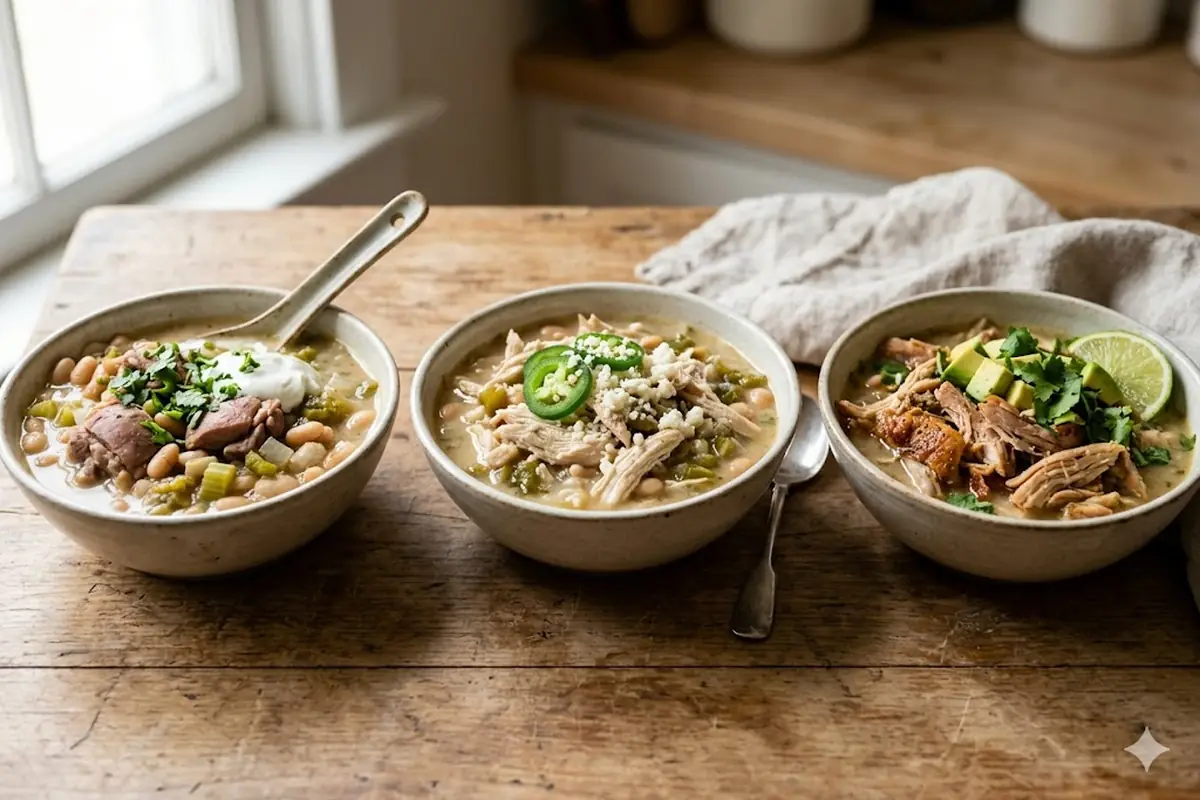
Boneless skinless chicken thighs are my pick because they stay tender and forgiving through a long simmer and they carry more flavor and fat, which suits keto. Chicken breast works and is leaner, but it can dry out if you overcook it, so pull it as soon as it shreds easily. Rotisserie chicken is the shortcut that makes this a 20-minute weeknight bowl: skip all the raw-chicken cooking and just fold the shredded meat in at the end to warm through. Buy a plain rotisserie bird, not a seasoned or honey-glazed one, since those glazes can carry added sugar.
Substitutions That Hold Up Versus Ones That Collapse
Some swaps are seamless and some quietly wreck the dish. These hold up: pepper jack or cheddar in place of a Mexican blend, fresh jalapeno or salsa verde in place of canned green chiles, and chicken breast in place of thighs. These are riskier: half-and-half instead of heavy cream works but adds carbs and is thinner, so you will likely need a touch more cream cheese to compensate. Full-fat coconut milk makes a dairy-free version possible, but it shifts the flavor noticeably toward coconut, so add extra lime and cumin to balance it and know it will not taste like the classic. Do not swap in low-fat cream cheese expecting the same body; the fat is doing structural work here, and reduced-fat versions thin out and can turn grainy.
Storing, Freezing, and Reheating
This chili keeps in the fridge for up to four days and the flavor actually improves on day two as the spices settle. It freezes well for up to three months, but there is one caveat with any cream-based soup: dairy can separate slightly when frozen and thawed. To minimize this, cool the chili completely before freezing, freeze in portion-sized containers, and reheat gently. Thaw in the fridge overnight, then warm on the stove over low heat, stirring often, rather than blasting it in the microwave where the fat is more likely to break. If it does look broken, a quick whisk or a few seconds with an immersion blender usually brings it back together. Add a splash of fresh cream or stock when reheating to loosen it, since it thickens considerably in the fridge.
Frequently Asked Questions
How many carbs are in keto white chicken chili?
A well-made keto white chicken chili runs about 5 to 7 grams of net carbs per serving, compared to roughly 25 to 30 grams in a traditional bean-and-flour version. The carbs come mainly from green chiles, cream cheese, and a small amount of aromatics. As long as you skip beans and starch thickeners, the count stays in that range.
What can I use instead of beans in white chicken chili?
Nothing is strictly required, because cream cheese replaces the thickening the beans provided. If you want the heft and bulk that beans gave, stir in a cup of cauliflower rice, riced broccoli, or chopped zucchini in the last ten minutes of cooking. These add body and a little fiber for very few net carbs without dragging the dish out of keto range.
Can I make keto white chicken chili dairy-free?
Yes, but it changes the flavor. Swap the cream cheese and heavy cream for full-fat coconut milk and a thickener like xanthan gum. The result is creamy and keto-friendly but reads more coconut-forward, so add extra lime, cumin, and a little salt to rebalance it. It will not taste identical to the dairy version, but it is a solid option for those avoiding dairy.
How do I thicken keto white chicken chili without flour?
Lean on cream cheese first, then layer in any of these: a quarter teaspoon of xanthan gum whisked in slowly, extra shredded cheese melted at the end, or simply simmering uncovered for ten to fifteen minutes to reduce the liquid. All of these add body without adding the carbs that flour or cornstarch would.
Why did my chili turn out grainy or separated?
Graininess usually comes from cold cream cheese added too fast, dairy boiled too hard, or low-fat cream cheese that lacks the structure to stay smooth. Use full-fat cream cheese at room temperature, cut it into cubes, melt it over low heat, and add heavy cream off the boil. If it still looks broken, an immersion blender will smooth it out in seconds.
Can I use rotisserie chicken to make this faster?
Absolutely. Rotisserie chicken turns this into a 20-minute meal. Skip all the raw-chicken cooking, build your flavor base and creamy sauce, then fold the shredded rotisserie meat in at the end to warm through. Choose a plain rotisserie bird rather than a glazed or heavily seasoned one to avoid hidden added sugars.
The Takeaway
White chicken chili keto is one of those rare low-carb swaps that loses nothing and arguably gains body and richness over the original. The whole trick is recognizing that the beans were structure, not flavor, and replacing that structure with cream cheese, a little cheese, and a patient uncovered simmer. Get your spices bloomed, your stock honest, and your cream cheese smooth, and you will have a bowl that feeds the whole table and never reads as a diet compromise. For more cold-weather ideas once you have this one down, my roundup of the best fall soup bowls is a good next stop, and if you want the science of building rich liquid bases, the same principles I cover for broth apply to every pot you will ever make. You can read more about chili technique from America’s Test Kitchen and the seasoning side at Bon Appetit.