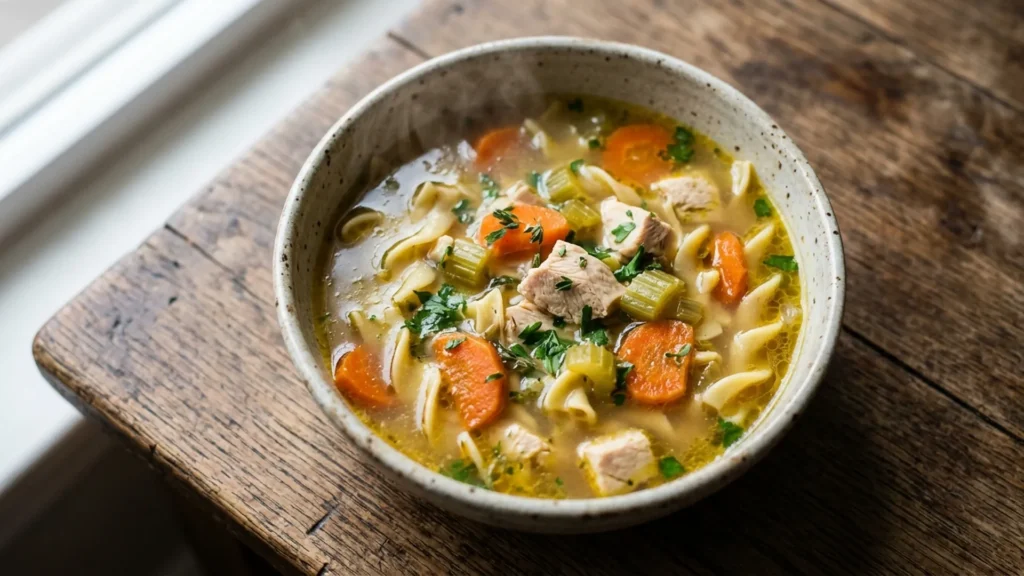
Homemade chicken noodle soup is the comfort food everyone should know how to make from scratch, and the good news is it is genuinely simple: build a flavorful broth from chicken and aromatics, shred the tender meat back in, and cook the noodles right before serving so they stay perfect. The whole thing comes down to three things done well, a real broth instead of water, the classic trio of onion, carrot, and celery cooked until sweet, and the discipline to add the noodles last. Get those right and you have a bowl that tastes like someone spent all day on it, even when you used a shortcut chicken and had dinner on the table in under an hour.
This guide walks through every path: the rich whole-chicken method that makes its own stock, the faster bone-in-thigh version, and the fastest rotisserie-chicken shortcut. You will get the aromatics that matter, the herbs that make it taste homemade, the single biggest mistake (mushy noodles) and exactly how to avoid it, plus storage and reheating that keep leftovers good. If you want to go deep on the foundation, my full walkthrough on how to make chicken stock is the companion piece; here we turn that stock into the most comforting bowl in the kitchen.
Start With the Broth
The single thing that separates a memorable chicken noodle soup from a forgettable one is the broth. Soup made with water and a few bouillon cubes tastes thin and salty; soup built on a real chicken broth tastes deep, golden, and satisfying. You have three good ways to get there, depending on how much time you have.
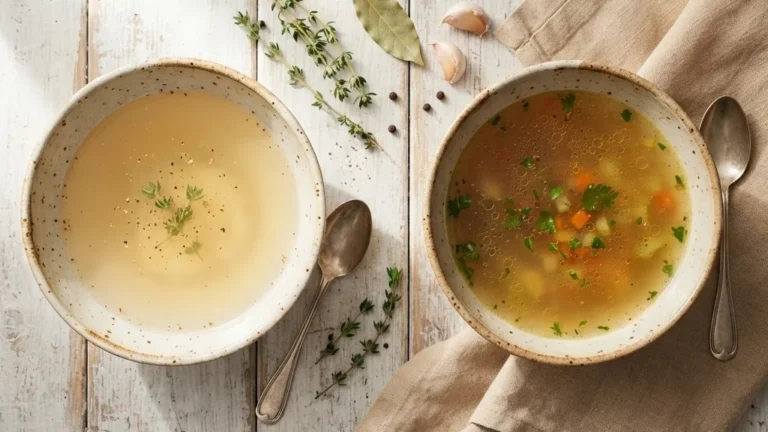
- From a whole chicken (richest): simmer a whole chicken with onion, carrot, celery, garlic, peppercorns, bay leaves, and thyme in enough water to cover, gently for about 1.5 to 2 hours until the meat falls off the bone. You get homemade stock and cooked chicken in one pot. Strain, shred the meat, and you are halfway to soup.
- From bone-in thighs (faster, still rich): bone-in, skin-on thighs give a deeply flavored broth in under an hour because there is less meat to cook through. Simmer them in store-bought or homemade broth with the aromatics, then pull the meat.
- From rotisserie chicken plus good broth (fastest): use a quality store-bought broth, build your aromatics, and stir in shredded rotisserie meat at the end. The bird is already cooked and seasoned, so the soup comes together in about half an hour.
Whichever path you take, the goal is the same: a broth with real chicken flavor as the backbone. If you simmer a whole chicken or thighs, skim the foam that rises in the first thirty minutes for a cleaner broth, and chill the broth and skim the hardened fat off the top if you want it lighter. The test cooks at America’s Test Kitchen recommend the same gentle simmer and early skim for the clearest, most flavorful result.
The Aromatics That Build Flavor
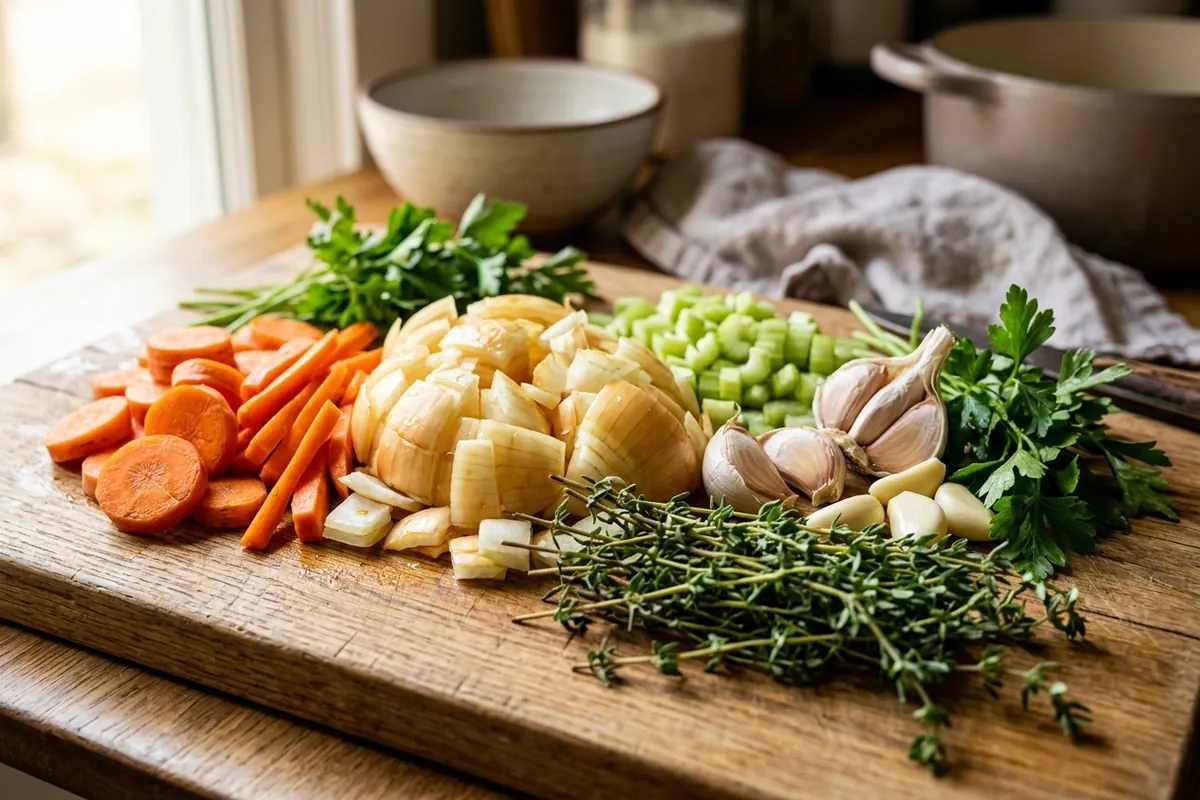
Classic chicken noodle soup is built on a mirepoix, the French term for the trio of onion, carrot, and celery. These four ingredients, including the garlic, are what give the soup its familiar, comforting flavor. The technique tip most home cooks skip is to cook them slowly in a little oil or butter before the broth goes in. As they soften over gentle heat, the onion turns sweet and the whole base gains a deeper, rounder flavor than if you just boil raw vegetables in broth.
Dice everything to a similar size so each spoonful carries a bit of everything. Carrots can go slightly chunkier since they hold their shape and texture well; celery and onion want to be a bit finer. Some cooks like to add a parsnip or a handful of chopped leek to the mirepoix for extra sweetness and depth, and both are worth trying if you have them. A pinch of salt added while the vegetables cook draws out their moisture and helps them soften and concentrate rather than steam. Cook them five to seven minutes until the onion is translucent and the kitchen smells like Sunday, then add the garlic for the last minute so it does not burn, and pour in the broth.
Choosing and Cooking the Chicken
The cut of chicken you use changes both the flavor and the texture of the meat in the bowl.
| Chicken | Flavor and texture | Best when |
|---|---|---|
| Whole chicken | Richest broth, mix of white and dark meat | You want the most flavor and have the time |
| Bone-in thighs | Deep flavor, juicy, forgiving dark meat | You want richness faster than a whole bird |
| Boneless breasts | Leaner, milder, can dry out if overcooked | You prefer white meat; pull them at 165F |
| Rotisserie (pre-cooked) | Convenient, seasoned, tender | You want soup fast and the broth elsewhere |
However you cook it, shred or chop the meat into bite-size pieces and stir it back in near the end so it warms through without overcooking. If you used boneless breasts, pull them as soon as they reach 165F internal, shred, and return them; leaving them to boil makes them stringy and dry.
The Noodles: Your Biggest Decision
Egg noodles are the traditional choice for chicken noodle soup, and for good reason: they cook fast, hold a tender bite, and carry the broth well. But you can use almost any small pasta, like ditalini, rotini, small shells, or broken spaghetti, and even rice or orzo for a different feel. The decision that matters more than the shape is how you cook them.
Here is the rule that saves your soup: noodles cooked in the broth keep absorbing liquid and softening, even after the heat is off. Add them too early, or store the whole pot with the noodles in it, and you get a bowl of bloated, mushy pasta in a thickened, broth-starved soup by the next day. Cook the noodles only in the last several minutes before serving, just until tender. When the soup is otherwise done, bring it to a simmer, add the noodles, and cook them for about the package time minus a minute or two, stirring gently only once or twice so the broth stays clear rather than cloudy.
Cooking Noodles Separately for Leftovers
If you know you will have leftovers, and chicken noodle soup is the kind of soup you make a big pot of, the smartest move is to cook the noodles separately in salted water, drain them, and add a scoop to each bowl at serving time rather than dumping them into the whole pot. The broth and chicken then store and freeze beautifully on their own, and the noodles stay toothsome because they never sit in liquid. This is the same protect-the-starch logic that keeps a stored soup from turning to glue, the same approach I recommend for any brothy pot you mean to keep, and it is covered alongside other body-and-texture tips in the guide to managing a soup’s consistency. When you reheat the broth, it warms in minutes and you add fresh-cooked noodles, so leftovers taste as good as the first bowl.
A Simple From-Scratch Recipe
Here is a straightforward version using bone-in thighs, which balances flavor and speed. It makes a generous pot for four to six.
- 2 tablespoons olive oil or butter
- 1 medium onion, diced
- 3 carrots, sliced
- 2 celery ribs, sliced
- 3 cloves garlic, minced
- 1.5 pounds bone-in, skin-on chicken thighs
- 8 cups chicken broth
- 2 bay leaves and a few sprigs fresh thyme
- 6 ounces egg noodles
- Fresh parsley, a squeeze of lemon, salt, and pepper to finish
Warm the oil in a large pot over medium heat and cook the onion, carrot, and celery for five to seven minutes until softened and sweet. Add the garlic for the last minute. Pour in the broth, add the chicken thighs, bay leaves, and thyme, and bring to a gentle simmer. Cover partly and simmer about 30 to 40 minutes until the chicken is cooked through and tender. Remove the chicken, discard the skin and bones, and shred the meat. Return the meat to the pot, fish out the bay leaves and thyme stems, and taste for salt. Bring back to a simmer, add the egg noodles, and cook until just tender, about seven minutes. Stir in chopped parsley and a squeeze of lemon, and serve. If you are making this for leftovers, cook the noodles separately and add them per bowl.
Variations Worth Trying
Once you have the basic method down, the soup is a canvas. A few of my favorite variations:
- Lemon chicken with orzo: swap egg noodles for orzo and lean into the lemon for a brighter, Greek-leaning bowl. A handful of spinach wilted in at the end makes it feel lighter.
- Creamy chicken noodle: stir in a splash of cream or a small amount of a roux at the end for a richer, chowder-like soup. Wide egg noodles suit this version.
- Spicy ginger version: add fresh ginger and a little chili to the broth, finish with scallions and a splash of soy, for a soup that doubles as a cold remedy.
- Extra-vegetable: add peas, corn, green beans, or chopped greens in the last few minutes for a heartier, more colorful pot.
- Rice instead of noodles: chicken and rice soup follows the exact same method; cook the rice separately and add it per bowl so it does not bloat, just like the noodles.
None of these stray far from the core technique. Good broth, sweet aromatics, tender chicken, and a starch added late: vary the starch, the herbs, and the finish, and you have a dozen different soups from one reliable base.
Herbs and Finishing Touches
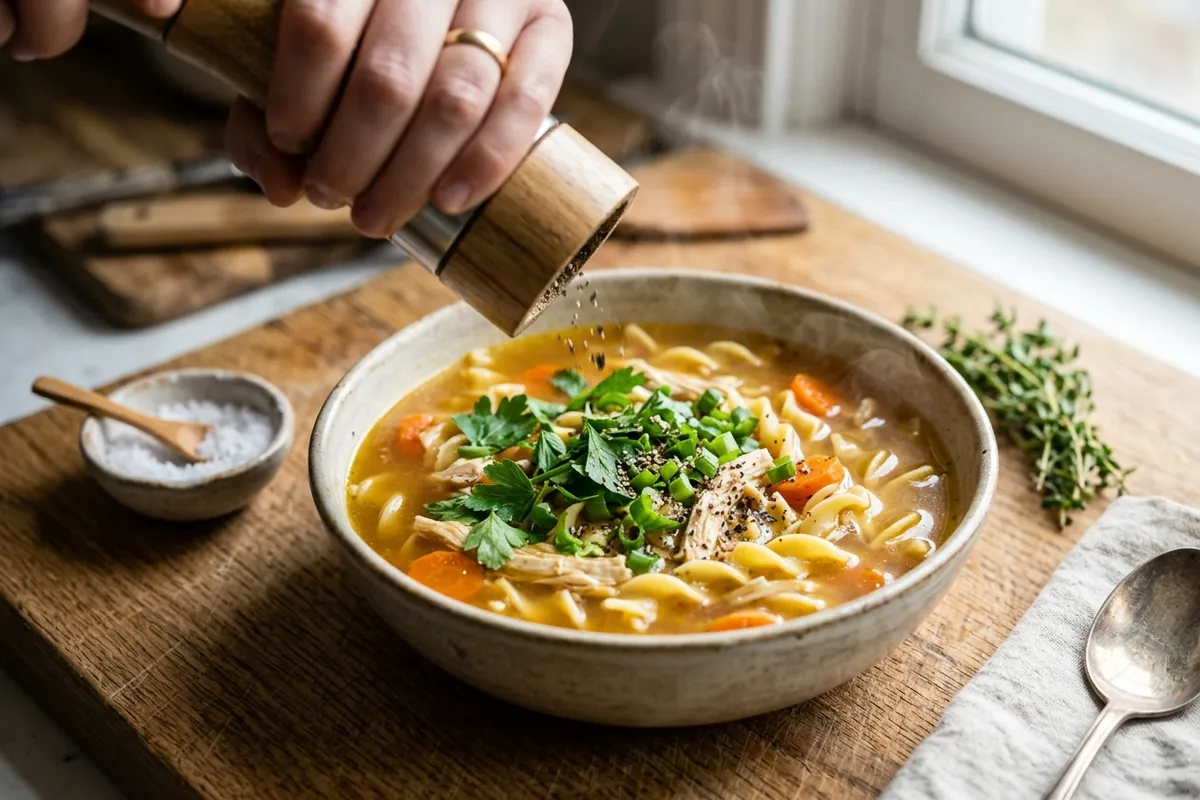
Herbs are what push a good chicken noodle soup into homemade territory. A couple of bay leaves and a few sprigs of fresh thyme go into the broth to simmer and add a quiet background depth; fish them out before serving. Dried thyme, basil, or oregano work if you do not have fresh. The brightening move at the end is fresh parsley stirred in off the heat, which adds color and a clean, green lift.
The other finishing touch that takes the soup from good to very good is a small squeeze of fresh lemon juice right before serving. It wakes the whole bowl up, cutting the richness of the broth and making every other flavor pop. Taste and adjust the salt last, since a long simmer can leave even a good broth needing a final correction. A crack of black pepper finishes it. The team at Bon Appetit makes the same case for a hit of acid at the end of almost any long-cooked soup, and once you try it you will do it every time.
Common Mistakes and How to Avoid Them
Chicken noodle soup is forgiving, but a few missteps come up again and again.
- Watery, flat broth: you used water or weak broth and not enough chicken. Build the broth from a whole chicken or bone-in pieces, or start with a good stock, and do not skip the slow-cooked aromatics.
- Mushy noodles: they were added too early or stored in the soup. Add them only at the end, and cook them separately if you expect leftovers.
- Dry, stringy chicken: the meat boiled too long. Cook just until done, then shred and return it to warm through rather than simmering it for an hour.
- Cloudy broth: you boiled it hard or stirred too aggressively. Keep it at a gentle simmer and stir gently; skim the foam early for clarity.
- Bland soup: it needs salt and acid, not more time. Season at the end and finish with a squeeze of lemon.
Storing, Freezing, and Reheating
Chicken noodle soup keeps in the fridge for 3 to 4 days and freezes for up to 3 months, with one big caveat: the noodles. If they are in the pot, they will keep drinking up broth and softening, so the soup thickens and the pasta bloats. The fix is the same one above: store the broth, chicken, and vegetables together, and keep the noodles separate, adding fresh-cooked pasta per bowl. The noodle-free broth base freezes perfectly and reheats like new.
Cool the soup fully before refrigerating or freezing, and leave a little headspace in containers since the liquid expands when frozen. Reheat gently on the stove or in short microwave bursts, stirring so nothing scorches on the bottom. If the broth has reduced in storage, loosen it with a splash of water or stock. A pot of this soup, with noodles kept on the side, will feed you well through a whole week of cold-weather lunches. For more set-it-and-forget-it cold-weather cooking in the same spirit, a slow cooker beef stew is a natural next pot to master.
Frequently Asked Questions
What is the secret to good homemade chicken noodle soup?
A real chicken broth, not water. Build it from a whole chicken or bone-in thighs, or start with a good stock, then cook the aromatics slowly until sweet and finish with fresh parsley and a squeeze of lemon. Add the noodles last so they stay tender.
When should I add the noodles?
Only in the last several minutes before serving, cooked just until tender. Noodles keep absorbing broth and softening, so adding them early or storing them in the soup makes them mushy. For leftovers, cook the noodles separately and add them per bowl.
Can I use rotisserie chicken?
Yes, and it is the fastest route. Build your aromatics in a good store-bought broth, simmer briefly to meld the flavors, and stir in shredded rotisserie meat at the end to warm through. You can have soup in about half an hour this way. If you have a bird to cook first, the same shredded meat works across plenty of dishes, including air fryer mains on a busy night.
What noodles are best for chicken noodle soup?
Egg noodles are traditional and cook quickly with a tender bite. Small shapes like ditalini, rotini, small shells, or broken spaghetti also work, as do rice and orzo. The shape matters less than cooking them late so they stay firm.
How do I keep the broth from getting cloudy?
Keep it at a gentle simmer rather than a hard boil, skim the foam that rises in the first thirty minutes, and stir only gently and occasionally. Aggressive boiling and stirring break up the solids and cloud the broth.
Can I freeze chicken noodle soup?
Yes, for up to about 3 months, but freeze the broth, chicken, and vegetables without the noodles, since pasta turns mushy and soaks up liquid in storage. Cook fresh noodles when you reheat and add them per bowl for the best texture.
The Bottom Line
Homemade chicken noodle soup rewards a few simple habits more than any fancy technique. Build the broth from real chicken instead of water, cook the onion, carrot, and celery slowly until they turn sweet, and add the noodles only at the very end so they stay tender. Finish with parsley and a squeeze of lemon to brighten the whole bowl, and keep the noodles separate when you are storing leftovers so the soup never turns to mush. Do that, and a single pot gives you the most comforting food there is, made better than anything from a can and ready faster than you would expect.