Taco soup nutritional information varies more than most people expect, swinging from about 125 calories a cup for a lean chicken version to 475 or more for a loaded beef bowl. A typical 1-cup serving of classic ground-beef taco soup runs roughly 200 to 265 calories, with 18 to 23 grams of protein, 20 to 37 grams of carbohydrate, 10 to 11 grams of fiber, and a sodium load that can climb past 600 milligrams once you add a seasoning packet and canned beans. The protein and fiber are genuinely good; the sodium is the number worth watching.
I make taco soup constantly through the colder months, and the question I get most is not “is it healthy” but “why do the numbers online never match.” The answer is that taco soup is not one recipe. The protein you pick, whether you drain the beans, the broth you use, and what you pile on top each move the totals a lot. So instead of one more single-recipe number, here is the full picture: the macros by version, where the calories and sodium actually come from, what the toppings add, and exactly how to lighten the bowl without making it sad.
Taco soup nutrition at a glance, by version
Here is the side-by-side comparison the recipe pages never give you, drawn from common preparations. All figures are per 1-cup serving so you can compare apples to apples (many recipes quote 1.5 cups, which inflates every number by half).
| Version (per 1 cup) | Calories | Protein | Carbs | Fat | Fiber | Sodium |
|---|---|---|---|---|---|---|
| Classic ground beef (80/20) | 250-265 | 18g | 24g | 12g | 7g | 620mg |
| Lean beef (93/7) or turkey | 190-210 | 20g | 23g | 6g | 7g | 560mg |
| Chicken breast | 125-150 | 15g | 10g | 2g | 3g | 300-450mg |
| Vegetarian (extra beans) | 170-200 | 11g | 32g | 3g | 11g | 500mg |
Two things jump out. The chicken version is the lightest by far because it skips the beans-and-beef carb-and-fat stack, while the vegetarian version is the fiber champion at around 11 grams a cup. Pick your version based on what you actually want from the bowl: protein and richness from beef, leanness from chicken, or fiber and budget from beans.
Where the calories actually come from
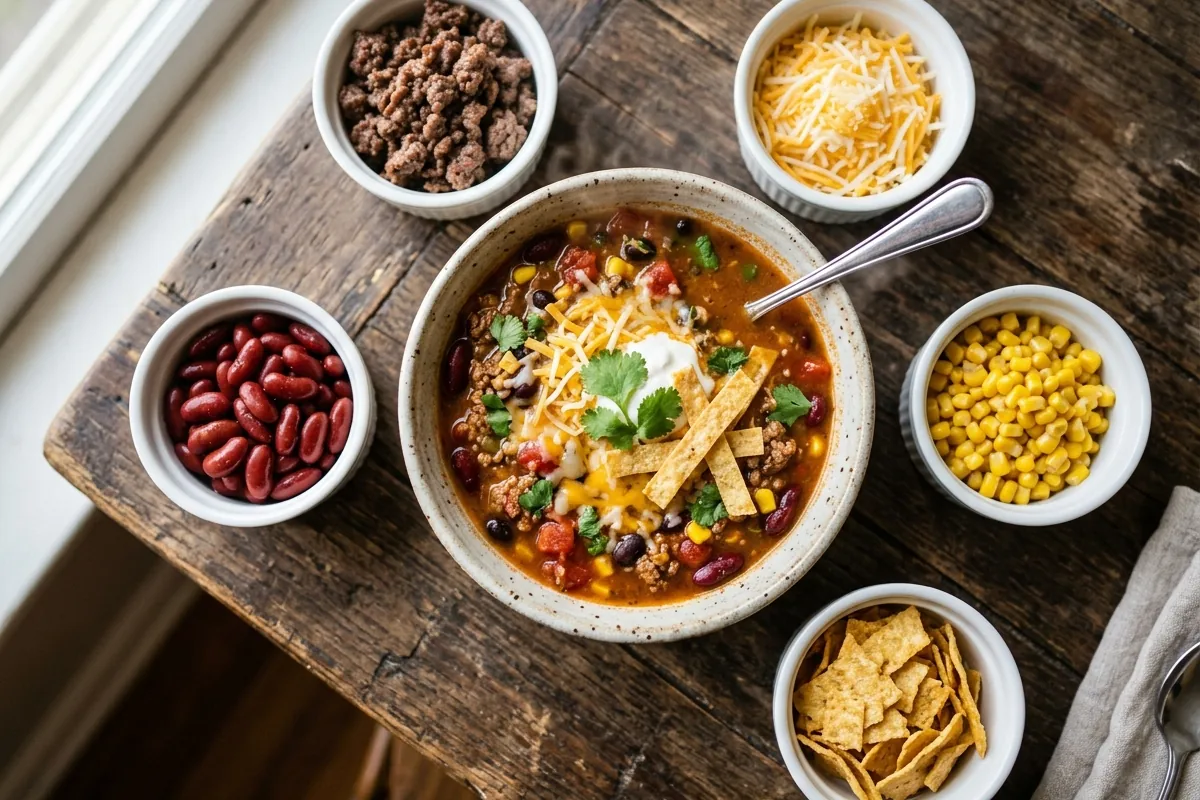
If you want to change a number, you have to know which ingredient owns it. This is the ingredient-level breakdown almost no nutrition page bothers to show. Figures are rough per-cup contributions in a standard beef recipe.
- Ground beef (80/20): the single biggest lever, roughly 90 to 110 calories and most of the fat per cup. Switching to 93/7 lean or turkey cuts 40 to 60 calories and over half the fat.
- Beans (pinto, black, kidney): about 50 to 70 calories per cup of soup, but they bring the fiber and a chunk of the carbs. This is good weight, not empty weight.
- Corn: 20 to 30 calories and a little natural sugar. Easy to cut if you want fewer carbs.
- Tomatoes and broth: nearly free on calories, but the broth is where a lot of the sodium hides.
- Seasoning packet: only about 15 calories, but a single packet can carry 1,200 to 1,500 milligrams of sodium spread across the pot.
So the calorie story is mostly beef and beans, while the sodium story is mostly the seasoning packet and broth. Those are different levers, and knowing which is which means you can lower fat without touching salt, or slash sodium without losing a single calorie of protein.
The sodium problem nobody warns you about
Here is the number I actually watch. A bowl of taco soup can quietly stack to 700 to 1,000 milligrams of sodium per serving, which is a third to nearly half the recommended daily limit of 2,300 milligrams in one cup. Three culprits compound: the seasoning packet, the canned beans, and regular broth, each contributing a few hundred milligrams.
The fix is straightforward and costs nothing in flavor. Drain and rinse your canned beans, which removes up to 40 percent of their sodium, swap to low-sodium or no-salt-added broth, and make your own taco seasoning from chili powder, cumin, garlic, oregano, and paprika so you control the salt. Do all three and you can cut the sodium close to in half, down to the 350 to 450 milligram range, while the calories and protein barely move. The American Heart Association has clear guidance on daily sodium targets if you want the full context, and resources like America’s Test Kitchen have tested homemade spice blends that match the packet flavor without the salt bomb.
The toppings are where the math goes sideways
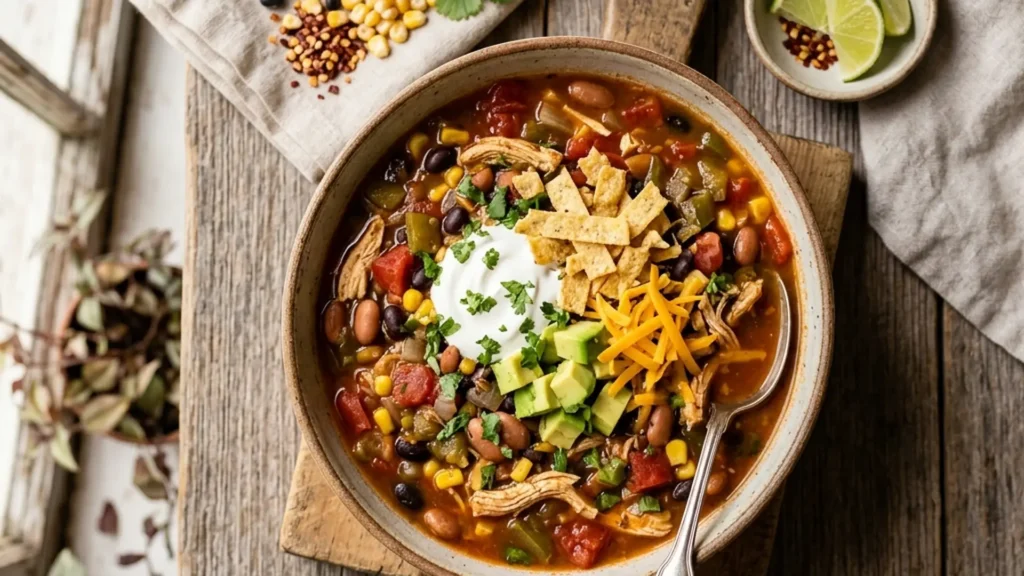
This is the part every nutrition page leaves off, and it is where a “light” bowl quietly becomes a heavy one. The soup base might be 200 calories, but the toppings can add as much again. Plan for them.
| Topping | Typical amount | Added calories | Added sodium |
|---|---|---|---|
| Shredded cheddar | 1/4 cup | 110 | 180mg |
| Sour cream | 2 Tbsp | 60 | 15mg |
| Tortilla chips | small handful (1 oz) | 140 | 120mg |
| Avocado | 1/4 fruit | 80 | 5mg |
| Plain Greek yogurt (swap for sour cream) | 2 Tbsp | 20 | 10mg |
Pile on cheese, sour cream, and chips and you have added roughly 300 calories before you take a bite. None of that is bad, but it should be a choice, not a surprise. My everyday swap is plain Greek yogurt for sour cream, which tastes nearly identical, adds protein, and saves 40 calories a dollop. Avocado is the topping I never cut, because the calories there come with fiber and healthy fat that actually keep you full.
How to make taco soup lighter without ruining it
You do not have to choose between a healthy bowl and a satisfying one. Stack these swaps and you can take a 265-calorie, 620-milligram-sodium cup down to roughly 170 calories and 350 milligrams while keeping the protein and fiber high.
- Swap the protein: 93/7 lean beef, ground turkey, or shredded chicken breast. Saves 40 to 110 calories and most of the fat per cup.
- Drain and rinse the beans: cuts up to 40 percent of their sodium for zero effort.
- Use low-sodium broth and homemade seasoning: the biggest sodium win, with no calorie cost.
- Load more vegetables: bell peppers, zucchini, and extra tomato bulk up the bowl with almost no calories, so a satisfying portion costs less.
- Mind the toppings: Greek yogurt for sour cream, a lighter hand on cheese, and fresh avocado or cilantro instead of a fistful of chips.
The version I land on most weeks is lean turkey, rinsed black and pinto beans, low-sodium broth, homemade seasoning, and a topping of Greek yogurt, avocado, and a little cheese. It comes in around 200 calories a cup with 20 grams of protein and tastes like the full-fat version. If you want a comparison with another high-protein, low-carb bowl, my white chicken chili keto recipe runs the numbers on a similar Tex-Mex soup, and for the broader trade-offs of bone-based broths there is an honest look in my piece on whether beef broth is good for you.
Is taco soup actually healthy?
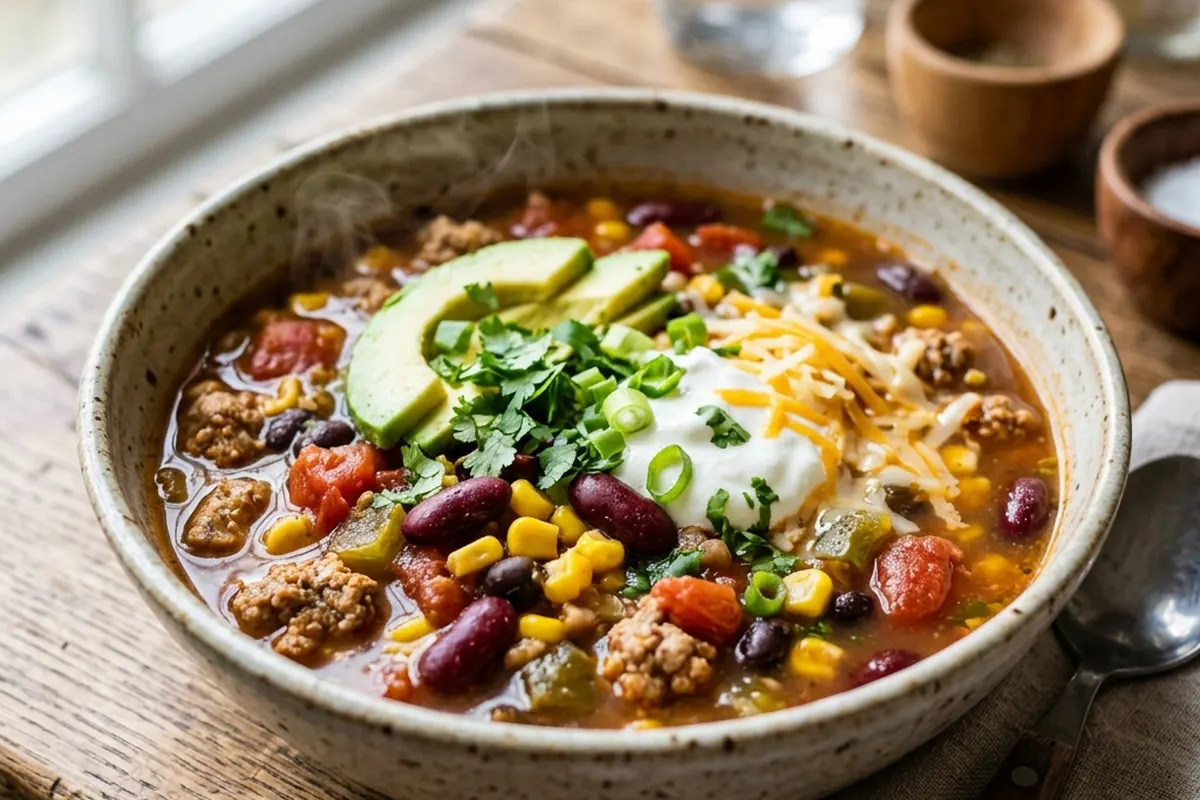
On balance, yes, and more so than most comfort foods. A cup delivers 15 to 23 grams of protein and 7 to 11 grams of fiber, which is a genuinely strong combination for satiety and blood-sugar stability. The beans bring fiber and plant protein, the tomatoes bring lycopene and vitamin C, and the lean-protein versions keep the fat in check.
The two things to manage are sodium and portion size. The sodium is fixable with the swaps above. Portion size is the sneaky one: many recipes quote nutrition per 1.5 cups, so if you eat two of those bowls you have had three cups, which triples the table. Serving it in a measured 1 to 1.5 cup portion with a side salad, rather than ladling endlessly, keeps the math honest. Cooks Illustrated and the editors at Bon Appetit both make the same point about bean soups: the fiber is what makes a modest portion genuinely filling.
Why the numbers online never agree
If you have searched this topic before, you have seen wildly different figures, and that is not sloppy reporting. It is real. Taco soup nutrition genuinely changes from kitchen to kitchen, and understanding why turns those confusing numbers into something you can actually use for your own bowl.
The first reason is serving size. One site quotes 1 cup, another quotes 1.5 cups, and a third divides the pot into eight portions without telling you how big the pot is. A recipe that says 396 calories per serving sounds heavy until you realize it is for a generous 1.5-cup bowl, which works out to about 264 calories a cup, right in line with everything else. Whenever you compare two numbers, convert them both to per-cup first or you are comparing nothing at all.
The second reason is the protein and its fat content. The same recipe made with 80/20 ground beef, 93/7 lean beef, ground turkey, or shredded chicken can swing by more than 100 calories a cup, almost all of it from fat. A page that tested its recipe with chicken will always look dramatically lighter than one built on regular ground beef, even if every other ingredient is identical.
The third reason is what gets counted. Many recipe cards calculate the soup base only and quietly ignore the toppings, even though the photo shows a mountain of cheese and chips. Others include a standard topping in the total. So one bowl pictured looks like 200 calories and the bowl you actually eat, with your own handful of chips, is closer to 400. When you read any taco soup nutrition figure, check whether toppings are in or out before you trust it.
Once you see those three variables, the chaos resolves. The honest range for a real, eaten bowl of taco soup with modest toppings is roughly 250 to 400 calories. Anything claiming much less has either used lean chicken, a small serving, or left the toppings off the books.
Batch cooking and keeping the macros consistent
Taco soup is one of the best meal-prep soups there is, but if you care about the numbers, a little discipline at the pot keeps every container honest. I make a big batch most Sundays, and here is how I keep the portions and macros from drifting.
First, weigh or measure the pot once it is done and divide deliberately. If you know the whole pot is, say, 10 cups and you built it to land near 250 calories a cup, then a 1.5-cup container is about 375 calories before toppings. Eyeballing ladles is where meal-prep tracking falls apart, because a heaping ladle and a level one can differ by half a cup. A quick measure the first time you portion a recipe tells you what a real serving looks like for that pot, and after that you can eyeball it with confidence.
Second, store the toppings separately. Cheese, chips, avocado, and yogurt all go on at serving time, never into the stored soup. This keeps the base macros fixed and predictable, lets the chips stay crisp, and means you can dress a weekday bowl lightly and a weekend bowl generously from the same batch. It also stops the soup from absorbing topping flavors and going off-balance after a few days.
Third, remember that taco soup is freezer-friendly, which makes the nutrition pay off over weeks rather than days. The bean-and-broth base holds its quality for up to 3 months frozen, so a single afternoon of cooking becomes a dozen controlled-portion lunches. The protein and fiber survive freezing intact; only the toppings need to be fresh. Cool the soup quickly, portion it into measured containers, and label each with the cup count so future-you knows exactly what a serving contains. That single habit is the difference between a freezer of mystery soup and a freezer of pre-tracked meals.
Frequently asked questions
How many calories are in a bowl of taco soup?
A 1-cup serving ranges from about 125 calories for a lean chicken version to 265 for classic ground beef, with most beef recipes landing near 250. A larger 1.5-cup bowl runs roughly 190 to 400 calories. Toppings like cheese, sour cream, and chips can add another 100 to 300 calories, so account for those separately.
Is taco soup high in protein?
Yes. Taco soup is a strong protein source thanks to the meat and beans, delivering 15 to 23 grams per cup depending on the version. Beef and chicken versions lean on animal protein, while a vegetarian version still hits about 11 grams a cup from beans, plus 11 grams of fiber.
How much sodium is in taco soup?
More than people expect, often 600 to 1,000 milligrams per serving once you factor in the seasoning packet, canned beans, and broth. You can cut that nearly in half by draining and rinsing the beans, using low-sodium broth, and making your own taco seasoning, all without losing calories or protein.
Is taco soup good for weight loss?
It can be, because the protein and fiber keep you full on relatively few calories, especially the chicken or lean-turkey versions at around 150 to 210 calories a cup. The keys are choosing a lean protein, going easy on calorie-dense toppings, and sticking to a measured 1 to 1.5 cup portion rather than open-ended refills.
How many carbs are in taco soup?
Between 7 and 37 grams per cup, driven almost entirely by the beans and corn. A chicken version with fewer beans can be as low as 7 to 10 grams, while a bean-heavy vegetarian version reaches the low 30s. Skip or reduce the corn and beans to lower carbs, or lean into them for fiber.
Can I make taco soup keto or low-carb?
Yes, with edits. Drop the beans and corn, lean on ground beef or chicken plus low-carb vegetables like peppers and zucchini, and use a sugar-free seasoning blend. That brings a cup down toward 6 to 10 grams of net carbs while keeping the protein high. The beans are what push standard taco soup out of keto range.
Bottom line
Taco soup nutritional information comes down to the choices you make, not a single fixed number. A cup runs roughly 125 to 265 calories with a strong 15 to 23 grams of protein and up to 11 grams of fiber, which makes it one of the more filling, balanced comfort foods you can put in a bowl. Watch the sodium, account for your toppings, and serve a measured portion, and taco soup earns its spot on a healthy table without giving up anything that makes it worth eating.
If you take just one thing from all this, make it the sodium swaps and the topping awareness. Those two moves change the bowl more than any fancy ingredient substitution, and neither costs you flavor or protein. Rinse the beans, reach for low-sodium broth, mix your own seasoning, and keep the cheese and chips as a measured topping rather than an open bag. Do that, and a homemade pot of taco soup is genuinely one of the smarter dinners you can build: high protein, high fiber, deeply satisfying, and entirely under your control from the first ladle to the last bite.