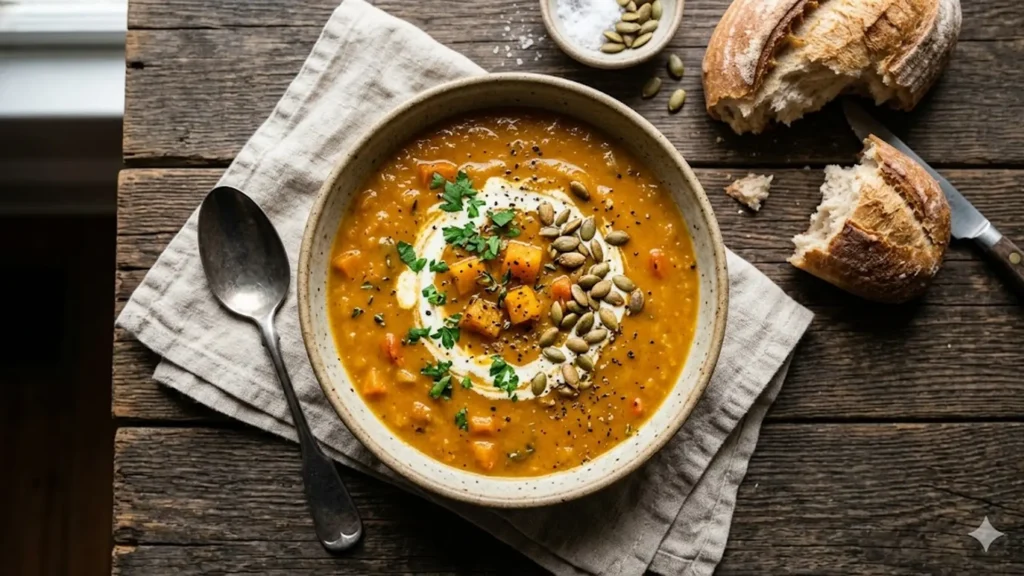
Best fall soup season is the easiest time of year to cook, because the produce does most of the work for you. The standout bowls of autumn lean on what is at its peak right now: butternut and other winter squash, pumpkin, sweet potatoes, mushrooms, leeks, apples, and the last good tomatoes, all rounded out with warming spices like cinnamon, nutmeg, cumin, and sage. A great fall soup is hearty enough to be dinner, gentle enough to comfort, and built on ingredients that are cheap and flavorful in September, October, and November. This guide is part best-of list and part how-to: it walks through the soups most worth making this season, explains what makes each one taste like fall, and gives you the small techniques (roasting the squash, blooming the spices, building body without cream) that separate a forgettable bowl from one you crave on a cold night. Whether you want something silky and refined or thick and rustic, there is a fall soup here with your name on it.
Autumn is when a soup pot earns its keep, so let us go through the season’s best, with US measurements and the reasons each one works.
What Makes a Soup a Fall Soup?
Before the list, it helps to know what gives a soup that unmistakable autumn character, because once you understand it you can fall-ify almost anything. Three things do most of the work. First, seasonal produce: winter squash, pumpkin, sweet potato, root vegetables, mushrooms, leeks, and apples are all at their peak and cheapest in fall, and they carry a natural sweetness and earthiness. Second, warming spices: cinnamon, nutmeg, cumin, coriander, smoked paprika, and fresh sage or thyme add the cozy, slightly spiced warmth we associate with the season. Third, body: fall soups tend to be thicker and more substantial than summer’s light broths, whether from blended squash, beans, grains, or a rich stock. Hit those three notes and you have a fall soup, no matter the specific recipe.
The Best Fall Soups, Ranked by Occasion
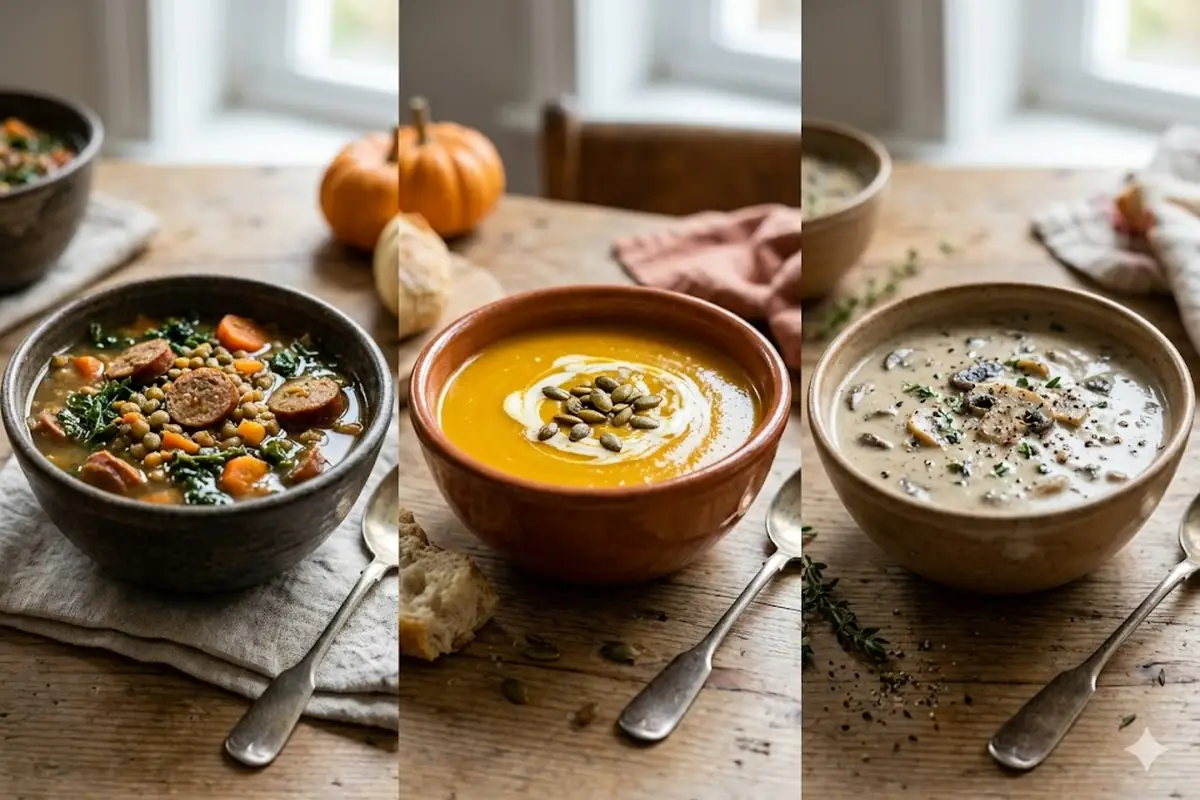
Rather than a random list, here are the soups grouped by what you actually want from them, so you can pick by mood.
| When you want… | Make this | Star ingredient |
|---|---|---|
| Silky and refined | Butternut squash soup | Roasted winter squash |
| Earthy and savory | Mushroom barley soup | Mixed mushrooms |
| Hearty dinner | Vegetable beef soup | Chuck and root veg |
| Cozy classic | Potato leek soup | Leeks and potato |
| Crowd pleaser | French onion soup | Caramelized onions |
| Big-batch comfort | Chicken and wild rice | Chicken and rice |
Butternut squash soup
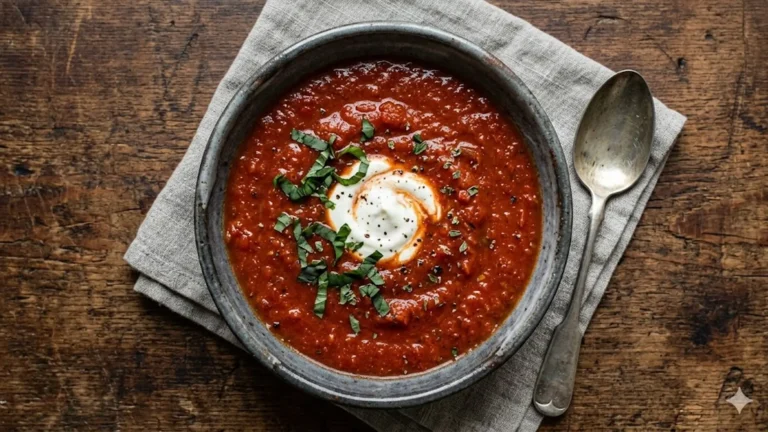
This is the signature fall soup, and for good reason. Roasted butternut squash blends into a soup that is creamy and a little sweet without needing much cream at all. The trick is to roast the squash rather than boil it: caramelizing the cut sides at 425 F concentrates the sugars and adds a depth you cannot get from simmering. Blend it with sauteed onion, a little garlic, stock, and a whisper of nutmeg or sage, and finish with a swirl of cream or coconut milk. It is refined enough for a dinner party and easy enough for a Tuesday.
Mushroom barley soup
For something earthy and savory rather than sweet, mushroom barley is the fall bowl to make. A mix of mushrooms, browned hard so they release their water and caramelize, gives a deep, almost meaty flavor, while chewy barley adds body and heft. Built on a good beef or vegetable stock with thyme, it is satisfying enough to be a full meal and gets even better the next day. This is comfort food that happens to be mostly vegetables.
Vegetable beef soup
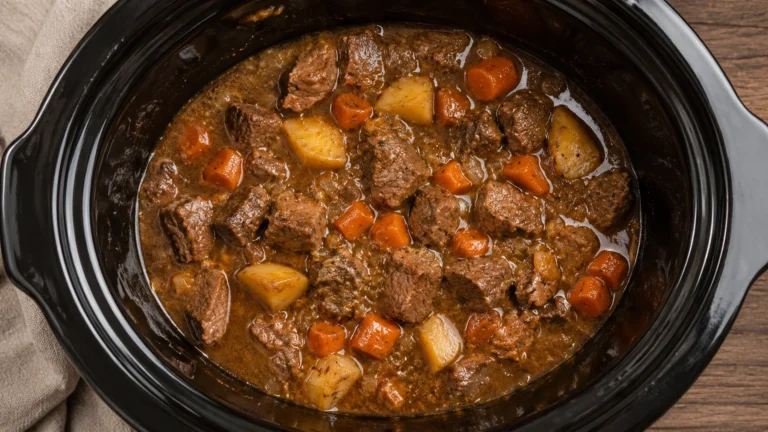
When you want a hearty, stick-to-your-ribs dinner, a classic vegetable beef soup loaded with fall root vegetables is hard to beat. Browned chuck simmered until tender, then bulked out with carrots, potatoes, and whatever the season offers, makes a one-pot meal that feeds a crowd and freezes well. If you want the full method, our step-by-step guide on how to make vegetable beef soup walks through browning the beef and adding the vegetables in the right order.
Potato leek soup
Few soups say cozy autumn like a smooth, buttery potato leek soup. Leeks have a gentle, sweet onion flavor that suits the season perfectly, and blended with potato they make a velvety bowl that needs little more than salt and a knob of butter. The one thing beginners get wrong is the leeks themselves, which trap grit between their layers and must be cleaned well; our guide on how to cut leeks for soup covers exactly how to slice and rinse them so no sand ends up in your bowl.
French onion soup
A crowd pleaser worth the patience, French onion soup is all about deeply caramelizing the onions, which can take 45 minutes of slow cooking to reach a sweet, mahogany richness. Topped with a slice of toasted bread and bubbling cheese, it turns humble onions into something special. It is the soup to make when you want to impress, and the long, slow cook is the whole secret. Food publications like Bon Appetit have detailed walkthroughs of getting those onions exactly right.
Chicken and wild rice soup
For big-batch comfort that feeds a family, a creamy chicken and wild rice soup is a fall staple. The nutty wild rice adds texture, the chicken makes it filling, and a touch of cream or a roux gives it the richness that suits cold weather. It reheats beautifully, which makes it a smart Sunday cook for the week ahead.
Two more bowls worth knowing
A couple of soups did not make the table above but deserve a mention. Pumpkin soup is the obvious cousin to butternut squash, made the same way with roasted pumpkin and a touch of cinnamon or curry, and it is wonderful when you can get sugar pumpkins rather than the watery carving kind. Sweet potato soup, often spiked with a little chipotle or ginger for contrast, is creamy, naturally sweet, and packed with the kind of color that makes a fall table look the part. Both blend smooth, freeze well, and lean on the same roasting trick that makes squash soup sing. If you want to go heartier, a smoky black bean soup or a white bean and kale soup carries plenty of autumn comfort with the protein to make it a real meal.
A Quick Guide to Fall Produce at Its Peak
Part of why fall soups taste so good is timing: the ingredients are at their best and their cheapest. Knowing what to grab makes shopping easier. Winter squash like butternut, acorn, and kabocha hit their stride from late September onward and keep for weeks in a cool spot, so you can stock up. Sugar pumpkins, the small sweet ones meant for cooking, appear alongside them. Sweet potatoes, regular potatoes, carrots, parsnips, and turnips are all sturdy root vegetables that store well and form the backbone of hearty soups. Leeks are in season and far sweeter than they look once cooked. Mushrooms are reliably good year-round but feel especially right in autumn. And the last of the season’s tomatoes, often sold cheap, are worth grabbing for one final batch of tomato soup before they vanish until summer. Apples and pears, while not soup staples, add a lovely sweet note blended into a squash soup. Shop the season and the soup almost makes itself.
The Techniques That Make Fall Soups Better
The recipes matter less than a handful of techniques that apply across all of them. Master these and every fall soup you make improves.
Roast your squash and root vegetables
Boiling squash or sweet potato leaches flavor into the water and leaves the soup watery and flat. Roasting them first, until the edges caramelize, concentrates the natural sugars and adds a toasty depth. The same goes for tomatoes and even onions. This single habit is the biggest upgrade you can make to any blended fall soup. The test kitchen at America’s Test Kitchen consistently roasts vegetables before blending for exactly this reason.
Bloom your spices
Warming spices like cumin, coriander, cinnamon, and curry powder taste fuller when you cook them in a little fat for 30 seconds before adding liquid, a step called blooming. It wakes up their aromatic oils and keeps the soup from tasting like raw spice dust. Drop them in with the sauteed onion, stir until fragrant, then add your stock.
Build body without drowning it in cream
Fall soups should be substantial, but you do not need heavy cream to get there. Blending starchy vegetables like squash, potato, or beans creates a thick, velvety texture on its own. A handful of red lentils or rice melts in and thickens too. Save the cream for a finishing swirl rather than the main source of body, and the soup tastes more of itself. If you do want more richness without dairy, a spoonful of nut butter or a few cashews blended into a squash soup add a silky, satisfying weight that reads as creamy.
Finish with texture on top
A blended fall soup can feel one-note unless you give it contrast, and the easiest way is a topping. Fried sage leaves crisp up in a minute in a little butter and scatter beautifully over squash soup. Toasted pumpkin seeds add crunch and look the part. A handful of croutons, a swirl of cream or good olive oil, a sprinkle of crumbled bacon, or a spoonful of pesto all turn a smooth soup into something with layers. Even a crack of black pepper and a few flaky salt crystals on top change how the first spoonful lands. These take seconds and make a homemade soup feel finished rather than plain, which matters when the soup itself is silky and uniform.
How to Make Any Soup Taste More Like Fall
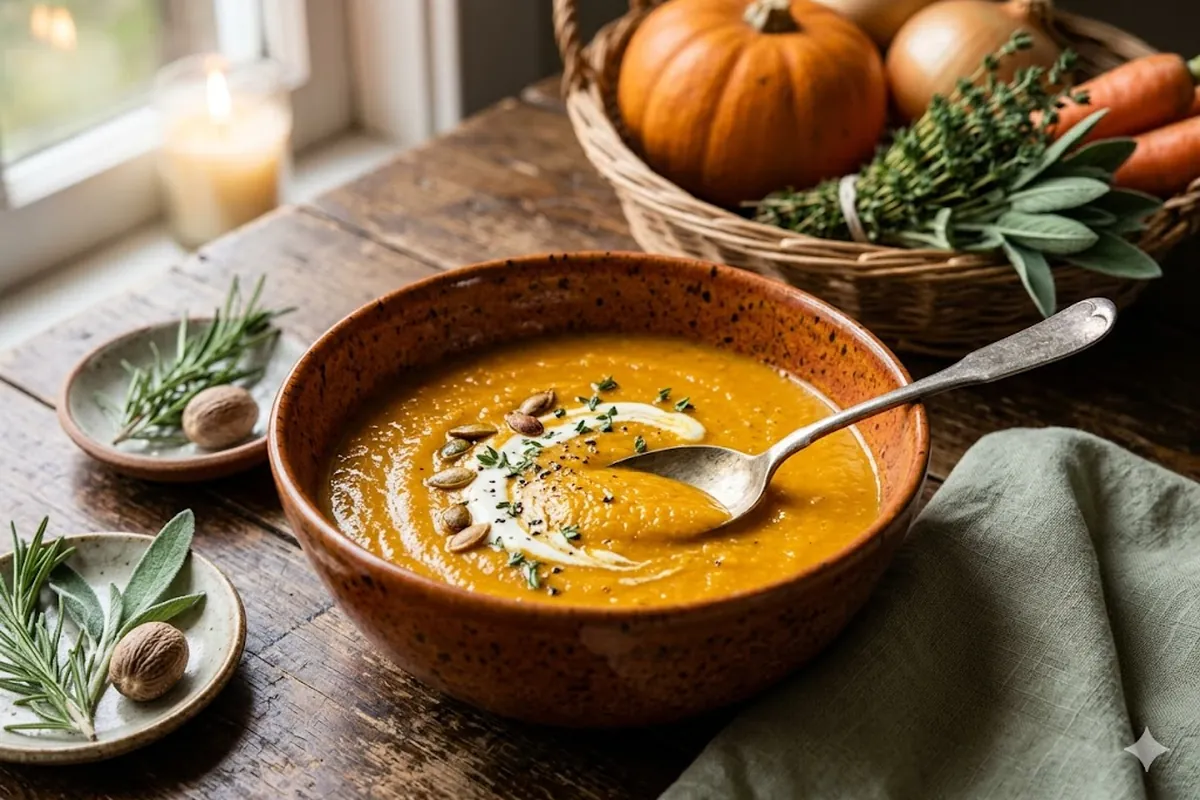
If you have a soup you already love, you can nudge it into autumn territory with a few additions. Stir in some roasted squash or sweet potato for sweetness and body. Add a pinch of warming spice, whether that is nutmeg in a creamy soup or smoked paprika and cumin in a savory one. Swap in seasonal vegetables like leeks, mushrooms, or root vegetables. Finish with fried sage leaves, toasted seeds, a swirl of cream, or a few croutons for a cozy, textural top. And lean on a rich homemade stock as the base, since a good stock carries body and flavor that no amount of seasoning can fake. The same low-and-slow patience that builds a great Cajun gumbo rewards almost any autumn pot.
Storing and Freezing Fall Soups
One of the joys of fall soup is that most of these keep and freeze beautifully, so a single afternoon of cooking pays off for weeks. Blended vegetable soups like butternut squash and potato leek freeze especially well, holding their texture for up to three months. Brothy and chunky soups keep four to five days in the fridge and freeze well too, with the usual caveat that potatoes can turn slightly grainy after thawing. The smart move with creamy soups is to freeze them before adding the cream, then stir it in fresh when you reheat, which avoids any graininess or separation. Portion soups into single servings so you can pull out exactly one bowl, and reheat gently, loosening with a splash of stock if they have thickened in the cold. Make a big pot on a Sunday and you will have warm, seasonal lunches all week.
Frequently Asked Questions
What is the best fall soup to make for beginners?
Butternut squash soup and potato leek soup are the easiest fall soups for beginners, since both are mostly a matter of softening vegetables, simmering, and blending smooth. Classic vegetable soup is also forgiving and flexible. Start by roasting the squash or sweetly softening the leeks, blend with stock, and season to taste. There is little that can go wrong, and the results taste impressively good.
What vegetables are best for fall soup?
The best fall soup vegetables are the ones at their seasonal peak: butternut and other winter squash, pumpkin, sweet potato, regular potatoes, carrots, parsnips, leeks, mushrooms, and the last of the tomatoes. Apples add a sweet note to squash soups, and hearty greens like kale go in near the end. These ingredients are cheapest and most flavorful in autumn, which is exactly why fall is such a good soup season.
How do I make fall soup creamy without heavy cream?
Blend starchy vegetables like squash, potato, or beans, which create a thick, velvety texture on their own with no dairy. Full-fat coconut milk gives a rich, creamy finish and keeps the soup vegan, while a cashew cream or a handful of red lentils simmered in also adds body. Roasting the vegetables first concentrates their flavor so the soup tastes full even without cream.
What spices make soup taste like fall?
Warming spices give soup its autumn character: cinnamon and nutmeg for sweeter squash and pumpkin soups, and cumin, coriander, smoked paprika, and curry powder for savory ones. Fresh sage and thyme are classic fall herbs that pair with squash and mushrooms. Bloom the spices in a little fat for 30 seconds before adding liquid to bring out their full aroma.
Which fall soups freeze the best?
Blended vegetable soups like butternut squash, pumpkin, and potato leek freeze the best, holding their smooth texture for up to three months. Brothy and chunky soups also freeze well. The main caution is dairy and potatoes: freeze creamy soups before adding the cream and stir it in fresh when reheating, since dairy can separate and potatoes can turn slightly grainy after thawing.
What should I serve with fall soup?
Crusty bread, dinner rolls, or a grilled cheese are the classic partners for soaking up a fall soup, while a slice of toasted bread with melted cheese suits French onion especially well. A simple green salad balances richer, creamier soups, and toppings like fried sage, toasted seeds, croutons, or a swirl of cream add texture and make the bowl feel finished.
Bottom Line
The best fall soup is really whichever one matches your mood and the produce in front of you, because autumn hands you everything you need. Lean on peak-season squash, pumpkin, root vegetables, mushrooms, and leeks, warm them with the right spices, and build body by blending rather than drowning the soup in cream. Roast your vegetables before blending, bloom your spices, and start from a good stock, and even a simple soup tastes like the season in a bowl. Make a big batch, because these soups keep for days and freeze for months, and you will have cozy, seasonal meals ready whenever the weather turns cold. That, more than any single recipe, is what makes fall the best soup season of the year. Keep a pot going through the cooler months, vary the squash and spices as the weeks pass, and you will never run out of warm, seasonal bowls to come home to.