
Cream of chicken soup nutritional information is something most people glance at on the back of a can and forget, yet it is worth a real look, because this pantry staple shows up in everything from casseroles to weeknight soups and the numbers shift a lot depending on how you read them. A can of condensed cream of chicken soup is not the same as a bowl of prepared soup, and a serving on the label is smaller than what most people actually eat. The headline figures, around 120 calories and 8 grams of fat per half-cup of condensed soup, hide the detail that matters most for your health, which is the sodium. I have spent years cooking soup from scratch, so I want to walk you through exactly what is in the can, how the numbers change once it is prepared, how brands differ, and how a homemade version compares.
I am Elsie, and my goal here is not to scare you off a convenient ingredient but to help you understand it. Whether you are counting macros, watching your sodium, feeding a family, or just curious what you are stirring into your green bean casserole, this guide breaks the label down line by line and gives you the context the nutrition panel leaves out.
The Basic Numbers: Condensed Cream of Chicken Soup
Let us start with the standard condensed product, the iconic red-and-white can. The label lists a serving as half a cup of the condensed soup, before you add anything. That half-cup serving runs roughly 120 calories and about 8 grams of total fat. A full 10.5-ounce can of condensed soup, which is about 2.5 servings, comes to around 271 calories, with roughly 17 to 18 grams of fat, 21 to 23 grams of carbohydrate, and about 7 grams of protein. So the whole can, undiluted, is a fairly modest 271 calories. The catch is that almost nobody eats it condensed, and the fat content per can being so high relative to the calories tells you this is a fat-forward food.
The macronutrient split is telling. By calories, a condensed cream of chicken soup runs roughly 58 percent fat, 32 percent carbohydrate, and only 11 percent protein. Despite the word chicken in the name, this is not a meaningful protein source. It is primarily fat and starch with a chicken flavor.
The Sodium Problem Nobody Talks About

If there is one number on the label that deserves your attention, it is the sodium. A single one-cup serving of prepared cream of chicken soup carries around 850 to 870 milligrams of sodium, which is roughly 37 percent of the entire recommended daily limit in one bowl. Eat two cups, a normal portion, and you have used up most of your day’s sodium allowance from soup alone, before any other food. This is the single biggest reason cream of chicken soup gets flagged by anyone managing blood pressure, heart health, or kidney concerns.
The sodium is doing real work in the product, both as flavor and as a preservative, which is why the regular versions are so high. If sodium is a concern for you, this is the number to track rather than the calories. The good news is that lower-sodium and unsalted versions exist, and a homemade batch puts you in complete control, which I will get to.
Condensed Versus Prepared: Why the Numbers Double
Here is where label reading trips people up. The nutrition facts on a can of condensed soup describe the soup as it sits in the can, concentrated. The package then tells you to add a can of water or milk to prepare it. What you add changes everything. Prepare it with water and you roughly keep the per-can numbers spread over a larger volume. Prepare it with whole milk, which many recipes suggest for creaminess, and you add the calories, fat, and carbohydrate of that milk on top, easily pushing a prepared bowl well past the condensed figures. A cup of whole milk adds about 150 calories and 8 grams of fat by itself.
This is why you see such different numbers floating around online. One source quotes the condensed can, another quotes a cup of prepared soup, and a third quotes a reduced-sodium version. They are all correct for what they measure. When you compare cream of chicken soup nutritional information across sources, always check whether the figure is for condensed or prepared, and what liquid was used to prepare it.
Vitamins and Minerals: The Thin Spots
Beyond the macros, the micronutrient profile is modest. A serving provides a meaningful amount of selenium, around 27 percent of the daily value, plus some potassium at roughly 14 percent and a little niacin and vitamin A. What is largely absent is just as notable: little to no vitamin C, vitamin D, calcium, or iron, and essentially no dietary fiber. This is not a food you eat for nutrition density. It is a flavor and texture base. Treating it as a vegetable serving because it contains the word soup would be a mistake, since the vegetable content is minimal and the fiber is near zero.
How Brands and Versions Compare
Not all cans are equal. The standard condensed version is the baseline. Reduced-sodium versions cut the sodium substantially, often by a third or more, while keeping calories similar. Unsalted or no-salt-added versions exist for people on strict sodium restrictions and can drop the sodium dramatically, though you will need to season your final dish yourself. Healthy-request or heart-healthy lines lower both sodium and fat. Store-brand versions track closely to the national brands on macros but can vary on sodium, so the label is worth a glance even if you assume they are identical. Organic or natural versions tend to swap some additives but are not automatically lower in calories, fat, or sodium, so do not assume natural means lighter.
If you use this product often in casseroles, switching to a reduced-sodium or unsalted version is the single easiest health upgrade you can make, because you control the seasoning at the end where a little salt goes a long way.
How It Compares to Homemade Cream of Chicken Soup
A homemade cream of chicken soup can land in a similar calorie range but with a far better nutrient story, mainly because you control the sodium and can build in real chicken and vegetables. Made from a good stock, shredded chicken, a little cream, and a flour or sweet rice flour thickener, a homemade bowl gives you genuine protein, real aromatics, and a fraction of the sodium. The flavor advantage is the same one that separates any homemade soup from canned: the body comes from a proper stock rather than from starch and salt. If you want to understand why that base matters so much, my honest look at whether beef broth is good for you explains the collagen and mineral benefits of a real homemade stock, and the same logic applies to a chicken base.
Homemade is not automatically low calorie, since cream and butter add up, but it is almost always lower in sodium and higher in actual protein and micronutrients than the can. And you can lighten it easily by using milk instead of cream or by thickening with pureed vegetables, which is how I approach a creamy soup when I want it to feel rich without the fat load. My guide to a homemade tomato soup uses that same pureed-vegetable trick to get body without relying on heavy cream.
Where It Fits in Different Diets
For a standard balanced diet, the occasional bowl or its use in a casserole is perfectly fine. The watchpoints come with specific goals. For low-sodium or heart-healthy eating, the regular version is a poor fit and the unsalted version is the way to go. For low-carb or keto, the 20-plus grams of carbohydrate per can from the starch thickener makes the standard product a tough fit, and you would want a cream-cheese-based homemade alternative instead. For high-protein eating, this is not a protein source at all and needs added chicken to count as a meal. For weight management, the calories are moderate but the low protein and fiber mean it will not keep you full on its own, so pair it with protein and vegetables. Knowing your own target tells you which number on the label to watch.
A Quick Homemade Version and How Its Numbers Stack Up
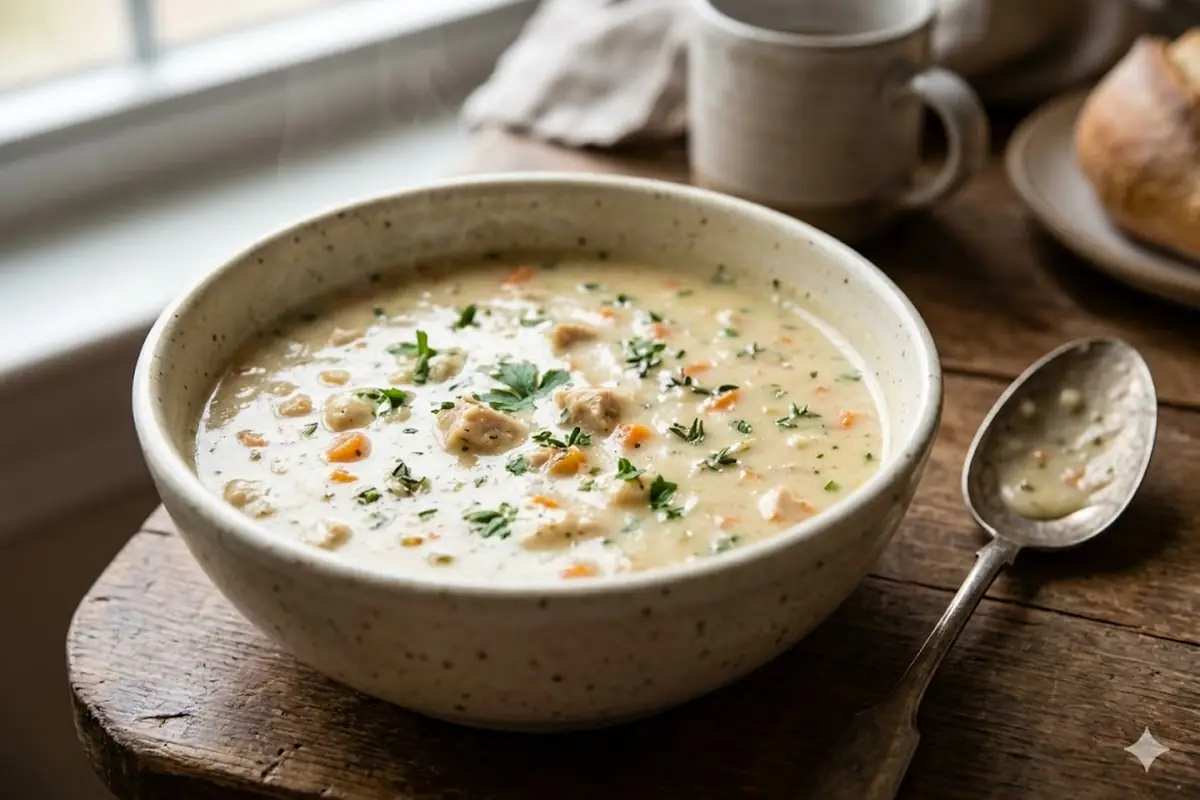
Making your own cream of chicken soup is faster than people expect, and it lets you decide every number on the imaginary label. Melt a couple of tablespoons of butter, whisk in an equal amount of flour or sweet rice flour to make a roux, and cook it a minute. Slowly whisk in about a cup and a half of chicken stock until smooth, then stir in half a cup of milk or cream and let it thicken. Season with salt, pepper, and a little thyme, and fold in shredded cooked chicken. That batch gives you a real bowl with genuine protein from the chicken, far less sodium than the can since you control the salt, and no preservatives. The calories land in a similar range to a milk-prepared can, but the protein roughly doubles and the sodium can be a quarter of the canned figure.
The reason this works so well is the stock. A homemade soup gets its savor and body from a real base rather than from salt and starch, which is the same thing that makes any scratch soup outperform its canned counterpart. The technique of building a creamy soup on a solid foundation is one I lean on constantly, and the slow-simmered richness behind it shows up in dishes like my crock pot beef stew, where the depth comes from patience and a good liquid rather than additives.
What Happens to the Nutrition in a Casserole
Most cans of cream of chicken soup never become soup at all. They go into casseroles, slow cooker dinners, and skillet meals as a binder and sauce. That changes the nutrition picture in ways worth knowing. Spread across a casserole that serves six or eight, the soup’s calories and fat divide into modest per-serving amounts, which is reassuring. The sodium, however, does not disappear, and a casserole that also includes cheese, processed meat, and added salt can stack up to a very high-sodium meal even though no single ingredient looked alarming. If you build a lot of meals around this product, using a reduced-sodium can is the easiest lever to pull, because the soup is often the largest single sodium contributor in the dish. Adding extra vegetables to the casserole also improves the fiber and nutrient balance that the soup itself does not provide.
Making It Healthier Without Losing the Comfort
You do not have to give up cream of chicken soup to make it work for you. A few simple moves help a lot. Choose a reduced-sodium or unsalted can as your base. Prepare it with low-fat milk or even unsalted stock instead of whole milk to trim fat and sodium. Stir in real shredded chicken and some vegetables to add protein, fiber, and nutrients the can lacks. Or make a quick homemade version, which is faster than people expect once you have stock on hand. Any of these turns a salty, starch-heavy convenience food into something closer to a balanced meal while keeping the creamy comfort that made you reach for it in the first place.
Frequently Asked Questions
How many calories are in cream of chicken soup?
A half-cup serving of condensed cream of chicken soup has roughly 120 calories, and a full 10.5-ounce can has about 271 calories. Once prepared with milk, the calorie count climbs because the milk adds its own calories and fat. A cup of soup prepared with milk can run noticeably higher than the condensed figure suggests, so check whether a quoted number is for condensed or prepared soup.
Is cream of chicken soup high in sodium?
Yes, very. A one-cup serving of prepared cream of chicken soup contains around 850 to 870 milligrams of sodium, about 37 percent of the recommended daily limit. A typical two-cup portion uses up most of a day’s sodium budget. If sodium is a concern, choose a reduced-sodium or unsalted version, or make it at home where you control the salt.
Is cream of chicken soup good for you?
It is fine in moderation but it is not a nutrient-dense food. It is mostly fat and starch with little protein, minimal fiber, and few vitamins beyond some selenium and potassium. Its main drawback is high sodium. You can make it healthier by choosing low-sodium versions, adding real chicken and vegetables, or making a homemade batch with a good stock.
How many carbs are in cream of chicken soup?
A full can of condensed cream of chicken soup contains roughly 21 to 23 grams of carbohydrate, coming mainly from the flour or starch used to thicken it. That makes the standard product a poor fit for low-carb or keto diets. A homemade version thickened with cream cheese instead of flour can cut the carbs substantially.
Does cream of chicken soup have much protein?
Not really. Despite the name, a full can has only about 7 grams of protein, around 11 percent of its calories. It is primarily a fat and starch base with chicken flavor rather than a real protein source. To make it a satisfying meal, stir in cooked shredded chicken, which also improves the nutrition profile considerably.
What is the difference between condensed and prepared nutrition numbers?
The nutrition label on a condensed can describes the concentrated soup before you add liquid. Once you prepare it with water or milk, the numbers change. Water mostly spreads the same nutrients over more volume, while milk adds calories, fat, and carbohydrate. This is why online sources disagree, so always confirm whether a figure refers to condensed or prepared soup and what liquid was used.
The Takeaway
Cream of chicken soup nutritional information comes down to one number worth watching above the rest: sodium. The calories are moderate and the fat is manageable, but the salt is high enough that anyone watching their heart health should reach for a reduced-sodium or unsalted can, or simply make their own. The product is convenient and comforting, and there is nothing wrong with using it, as long as you read the label knowing whether you are looking at condensed or prepared figures and you do not mistake it for a high-protein or nutrient-rich food. If you reach for it often, the smartest single change is switching to a reduced-sodium or unsalted can and adding your own chicken and vegetables, which closes most of the gap between the convenient version and a from-scratch one. For deeper nutrition context on pantry staples, both America’s Test Kitchen and Bon Appetit publish thoughtful breakdowns worth reading alongside the can in your hand.