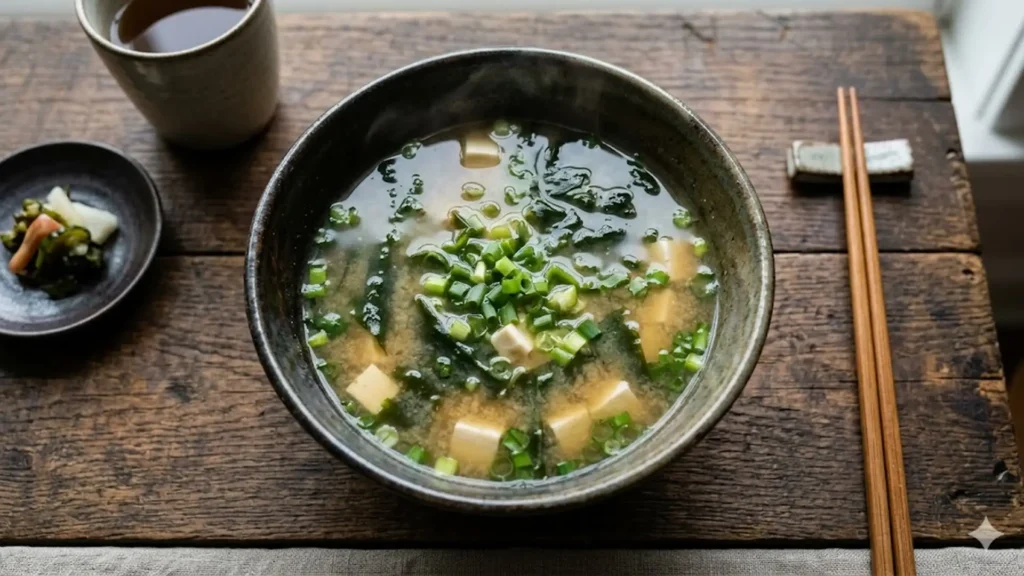
What is miso soup? Miso soup is a traditional Japanese soup built from two things: a savory stock called dashi and a spoonful of fermented soybean paste called miso whisked in at the end. That is the whole backbone. Everything else, the tofu, the seaweed, the scallions floating on top, is a variation on that simple, savory base.
I drink a bowl most mornings, and the reason it tastes so clean and deep in a good Japanese restaurant comes down to one rule that almost every online explainer skips. You never boil the miso. Get that part right and a five-minute soup tastes like something that took all day. Get it wrong and you end up with a flat, grainy bowl. Let me walk you through what miso soup actually is, how the two parts work, and how to make a bowl that tastes the way it should.
The two parts: dashi and miso
Miso soup is really a marriage of two components, and understanding each one is the whole game. The first is dashi, the Japanese stock that gives the soup its quiet, savory undertone. Classic dashi is made by steeping kombu, a dried kelp, with katsuobushi, shavings of dried and smoked bonito fish. Together they deliver a deep hit of umami, the fifth taste, without tasting fishy or heavy.
The second part is miso itself, a paste made by fermenting soybeans with salt and a mold culture called koji for months or even years. That fermentation is what turns plain soybeans into a complex, salty, slightly sweet paste loaded with savory depth. When you stir miso into warm dashi, the two combine into the cloudy, comforting broth you know. The principles behind building a savory base are the same ones I cover in my guide on how to make soup stock, just with Japanese ingredients standing in.
You can shortcut the dashi with instant dashi granules, and millions of Japanese home cooks do exactly that on busy mornings. There is no shame in it. But even a quick dashi made from a teaspoon of granules in hot water beats plain water, which makes a thin, lifeless miso soup no matter how good your paste is.
There is also a vegetarian path worth knowing. Kombu on its own, steeped in water, makes a clean plant-based dashi, and a few dried shiitake mushrooms added to the soak deepen it with a second layer of umami. This kombu-shiitake dashi skips the bonito entirely, so it suits anyone avoiding fish. The point holds either way: the stock is not optional. It is half of what miso soup is, and the bowl rises or falls on it.
The one rule that makes or breaks the bowl
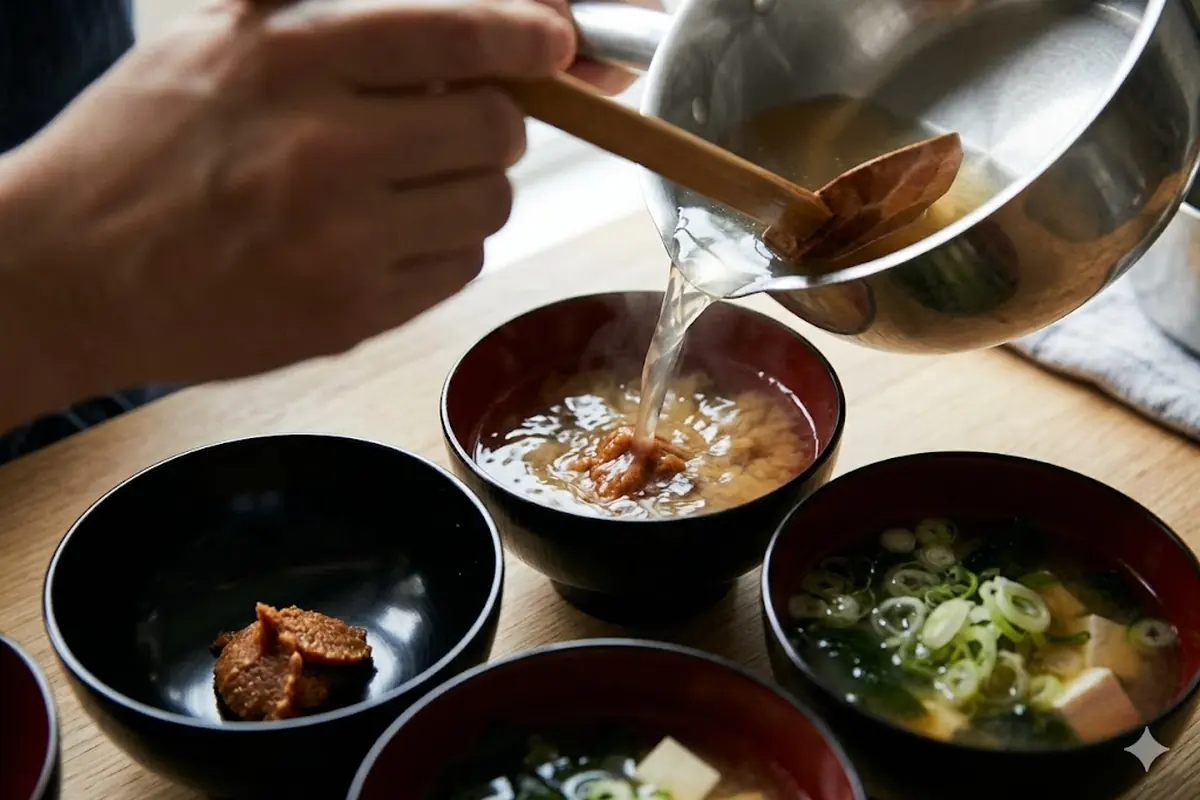
Here is the rule the recipe sites bury or skip entirely. Do not boil the miso. Once your dashi is hot and any vegetables are cooked, pull the pot off the heat or drop it below a bare simmer before the miso goes in. Whisk the paste into the warm, not boiling, liquid.
Two things break when miso boils. First, the live cultures from fermentation, the same probiotics that make miso a gut-friendly food, die off above roughly 180 degrees F. Second, the delicate aroma cooks away, leaving a duller, harsher flavor behind. Miso is a finishing ingredient, not something you cook into the broth. Treat it like you would treat fresh herbs that you stir in at the last second.
The standard ratio is one tablespoon of miso paste per one cup of dashi. Start there and adjust to taste, since different misos carry different salt levels, and a saltier red miso will need a slightly lighter hand than a mild white one. Taste before you serve and add a little more if the broth seems shy. I keep a small whisk by the stove just for this. The goal is a fully dissolved paste with no grainy lumps, which brings me to the technique most people get wrong.
How to dissolve miso without the grit
If you have ever had homemade miso soup with little gritty clumps at the bottom, the cook dumped the paste straight into the pot. Miso does not dissolve easily in hot liquid on its own. The trick I use, the one you see at good izakayas, is the ladle method.
Put your measured miso into a ladle or a small strainer, lower it just into the surface of the warm dashi, and whisk or press the paste through with chopsticks until it melts into the broth. The paste dissolves evenly and you never get clumps. It takes ten seconds longer than dumping it in and the difference in texture is night and day. This is the kind of small move that separates a restaurant bowl from a home one.
Choosing your miso: a quick decision tree
Walk into a Japanese grocery and the miso wall can feel overwhelming. It does not need to. Color tells you most of what you need to know, because darker miso means longer fermentation, more salt, and a stronger flavor. Here is how I choose.
- White miso (shiro): mild, slightly sweet, short fermentation. Use it for light, delicate soups, spring vegetables, or anytime you want gentle. This is the friendliest starter miso.
- Red miso (aka): bold, salty, deeply fermented. Reach for it in hearty winter bowls with root vegetables or pork, where you want the miso to push back.
- Awase miso (blend): a mix of red and white, balanced and forgiving. If you want one tub for everyday soup, buy this. It is what I keep in the fridge by default.
None of these are wrong. They just suit different bowls. A common move is to blend two misos, a spoon of white for sweetness and a spoon of red for depth, which is exactly the logic behind awase. Mix and match once you find your preference.
What goes in the bowl
The base is dashi and miso. The add-ins are where regional and seasonal variety lives. The most common trio is silken tofu cut into small cubes, wakame seaweed that you rehydrate for a few minutes, and thinly sliced scallions added raw at the end for a fresh bite. That combination is what most Americans picture when they think of miso soup.
From there it opens up. Sliced shiitake or enoki mushrooms add earthiness. Thin daikon radish, leafy greens, or even a beaten egg streamed in all work. The umami foundation in miso plays well with savory aromatics, the same balancing act I get into in my piece on what spices go in chicken noodle soup, where the goal is also layering savory notes without one flavor taking over. Keep your add-ins small and tender, since this is a quick soup and nothing should need long cooking.
Where miso soup fits in a Japanese meal
Miso soup is not a starter the way a bowl of soup is in American dining. It is part of the everyday structure of a Japanese meal. The traditional format is called ichiju-sansai, which means one soup and three dishes, served alongside a bowl of steamed rice. The miso soup is the one soup. It anchors breakfast, lunch, or dinner with quiet, warm savoriness.
That is why miso soup is usually mild and small rather than a big, filling bowl. It is meant to round out a plate of rice and a few sides, not dominate the table. Once you see it that way, the light body and the modest portion make sense. It is a supporting player, and a very good one. In a Western kitchen I treat it the same way, as a five-minute companion to a rice bowl or a piece of grilled fish rather than a meal on its own.
It also explains why the soup turns up at breakfast in Japan. A bowl of warm, savory broth with a little tofu is a gentle, hydrating way to start the day, and it pairs naturally with rice and pickles. I picked up the morning habit and have kept it. There is something steadying about the same warm bowl every day before the world gets loud.
Regional and seasonal variety
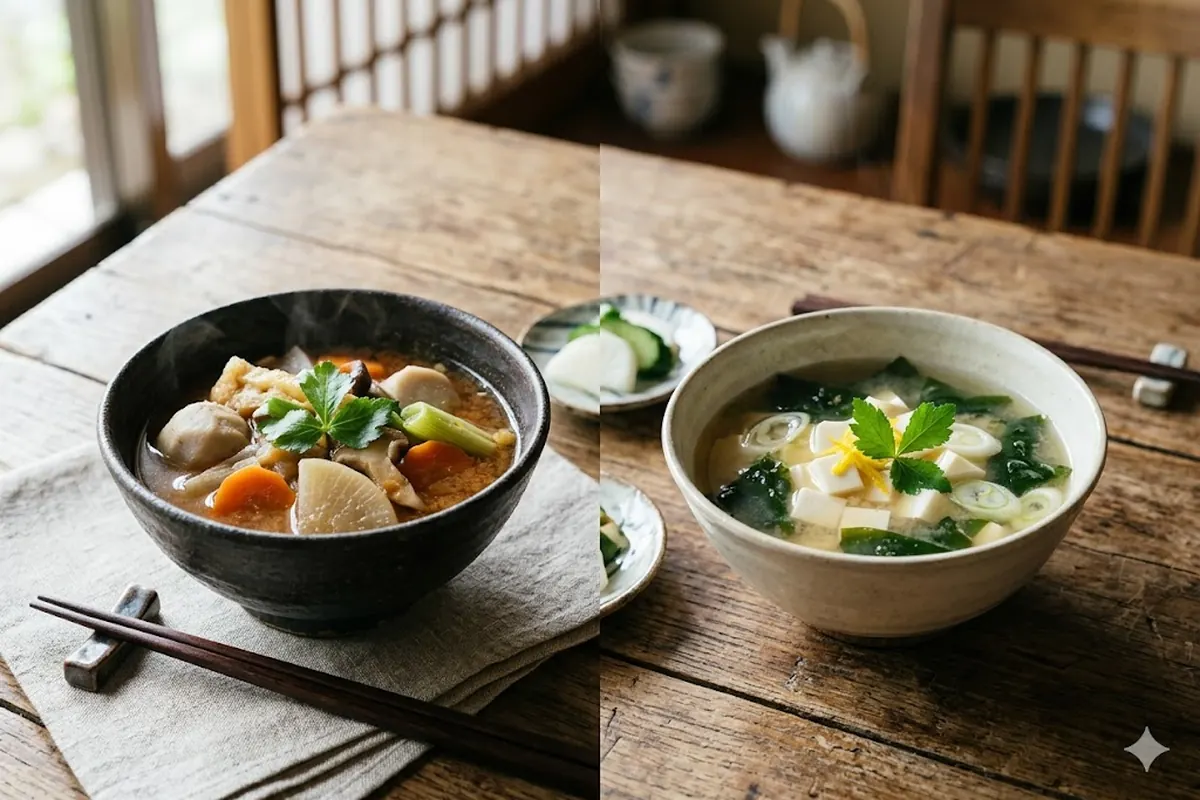
Part of what makes miso so interesting is how much it changes across Japan. The miso made in the cold north, like Sendai miso, tends to be saltier and redder, suited to long winters. The Shinshu miso from the mountains is a lighter, all-purpose style. Down in Aichi, Hatcho miso is a dark, intense, soybean-only paste aged for years that makes a powerful, almost chocolatey broth. Each region built its style around its climate and the foods grown nearby.
Season shapes the bowl too. In spring, cooks lean on white miso with tender greens and young vegetables. In the depths of winter, a red miso soup loaded with root vegetables and maybe a bit of pork warms you from the inside. The base never changes, dashi plus miso, but the personality of the bowl tracks the calendar. That flexibility is exactly why it never gets boring despite being a daily food.
Is miso soup good for you?
Miso soup is genuinely one of the lighter, more nourishing things you can eat. A one-cup serving made with miso, tofu, and scallions runs around 60 calories with about 5 grams of protein, so it fills you up for very little. The fermentation gives it probiotics and beneficial compounds, and studies have linked regular miso intake to better digestive comfort.
The one number to respect is sodium. A single cup can carry over 1,100 milligrams of sodium, and adults are generally advised to stay under 2,300 milligrams a day. That is not a reason to avoid it, just a reason to go easy on other salty foods in the same meal. If soy is an allergen or you take thyroid medication, talk to your doctor, since soy can interfere with absorption. Tofu and most miso are naturally gluten-free, but some misos use barley, so check the label. My notes on gluten free soup cover how to spot the sneaky sources.
Troubleshooting your miso soup
A few problems come up again and again. If your soup tastes flat and watery, the culprit is almost always weak or missing dashi. Plain water cannot carry the soup. If it tastes harsh and the aroma is gone, you boiled the miso, so next time stir it in off the heat. If it is too salty, you used too much paste for the liquid, so add a splash more dashi rather than fishing the miso back out.
And if the soup separates and looks watery on top after sitting, that is normal. Miso settles. Just give it a gentle stir before each serving and serve a fresh bowl rather than reheating it hard, since reboiling undoes the careful work of keeping the miso below a boil in the first place.
For storage, the smart move is to keep the dashi and the miso separate. Make a batch of dashi and refrigerate it for up to 3 days. Then, when you want a bowl, heat just what you need, pull it off the burner, and whisk in fresh miso paste at the one-tablespoon-per-cup ratio. This way every serving tastes freshly finished, with the aroma and probiotics intact, instead of degrading in a pot of pre-mixed soup. Miso paste itself keeps for months in the fridge, so you always have the second half ready to go.
A bowl I ruined, and what fixed it
The first time I made miso soup at home, I treated it like every other soup I knew. I stirred the paste into the pot and let it bubble away on the stove while I cut tofu, thinking I was building flavor the way I would with a stew. The result was murky, grainy, and weirdly bitter. It tasted nothing like the clean bowls I loved.
The fix was almost insulting in its simplicity. Pull the pot off the heat, dissolve the miso through a small strainer into the still-warm broth, and serve right away. The next bowl was clear, fragrant, and savory in that gentle way that makes you want a second cup. That one mistake rewired how I think about finishing ingredients in general. Some things you cook, and some things you add at the end and protect. Miso is firmly the second kind.
If you want to go deeper on the savory pantry, America’s Test Kitchen has a thorough breakdown of umami ingredients and how they stack, and Bon Appetit keeps a good library of Japanese pantry basics. For the broader world of savory Asian flavor pastes, SauceGrove has a useful guide to asian sauces that pairs well with this kind of cooking.
Frequently asked questions
What exactly is miso soup made of?
Miso soup is made of two core parts: dashi, a Japanese stock from kelp and dried bonito, and miso, a fermented soybean paste whisked in at the end. Common add-ins are tofu, wakame seaweed, and scallions, but those are optional. The dashi and miso are what make it miso soup.
Why should you not boil miso soup?
Boiling miso kills the live probiotic cultures from fermentation and cooks off the delicate aroma, leaving a flat, harsh flavor. Always stir miso into warm dashi off the heat or below about 180 degrees F. Miso is a finishing ingredient, not something to simmer into the broth.
What does miso soup taste like?
Miso soup tastes savory and deeply umami with a gentle saltiness and a faint sweetness from the fermented soybeans. It is light rather than rich, more brothy than creamy. The flavor shifts with the miso you use, from mild and sweet white miso to bold, salty red miso.
Is miso soup healthy?
Yes, it is one of the lighter nourishing soups you can eat, around 60 calories a cup with protein and probiotics. The main thing to watch is sodium, which can top 1,100 milligrams per cup. Enjoy it regularly but go easy on other salty foods in the same meal.
What kind of miso should a beginner buy?
Start with awase, a blended miso, or a white (shiro) miso. Awase is balanced and works for everyday soup, while white miso is mild and forgiving. Save bold red miso for heartier winter bowls once you know what you like. One good tub covers most home cooking.
Can I make miso soup without dashi?
You can, but it will taste thin. Dashi provides the savory backbone, and plain water cannot replace it. The easy fix is instant dashi granules, which take seconds and beat water by a mile. Even a quick dashi makes a noticeably better bowl than miso in plain hot water.
Is miso soup gluten-free?
Often, but not always. Tofu, dashi, and most miso are naturally gluten-free, but some miso is fermented with barley, which contains gluten. Check the label for barley or wheat, and choose a rice-based (kome) miso if you need to be sure. Instant dashi can also hide gluten.